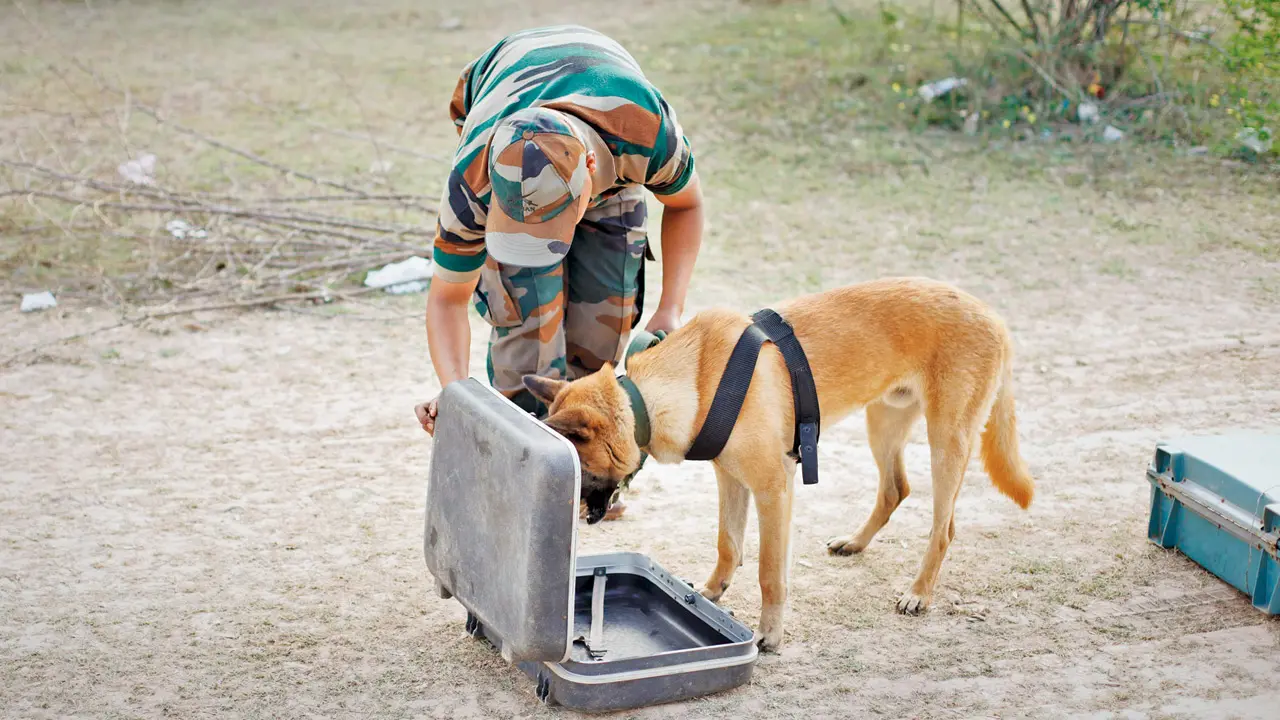
India’s wildlife faces relentless threats from smuggling and illegal trade, making stronger enforcement urgent. Sniffer dogs have proven to be a game-changer in detecting wildlife contraband and deterring crime. To scale this success, Maharashtra is partnering with World Wide Fund for Nature-India (WWF) to establish a dedicated wildlife sniffer dog training centre at Shahapur in Thane district, possibly India’s first of its kind.
Since 2008, WWF-India has pioneered this programme with forest departments and Railway Police Force (RPF). The new facility will train dog squads not just for Maharashtra’s tiger reserves, but for states across the country. Sunday mid-day sits down with Dr Dipankar Ghose, senior director — Biodiversity Conservation, WWF-India about what they hope to achieve with the sniffer dog training centre.
Dr Dipankar Ghose
Why does Maharashtra need this centre now?
India has rich biodiversity and is often targeted by wildlife smugglers and traders. Strengthening of wildlife law enforcement and deploying best practices to curb illegal wildlife trade is essential now. Use of wildlife sniffer dogs has been a game-changer. WWF-India, with support from various government-based dog training centres will help deploy a wildlife sniffer dog in every protected area across the country.
How will the Shahapur facility change detection and investigation?
The centre will train wildlife dog squads to detect wildlife contraband in transit, in homes, as well in luggage across mass transport systems, vehicles, and buried underground. This will help assist in investigating wildlife crime scenes and recovering crucial evidence for the same.
What contraband are the dogs being trained to detect, and why is it important?
Wildlife sniffer dogs are trained to detect a range of wildlife derivatives, including tiger and leopard bones and skins, elephant tusks, bear bile, deer antlers, pangolin scales, turtle shells, mongoose hairbrushes, and plant products such as red sanders and caterpillar fungus.
How many squads and where will they be deployed?
Deployment of the dog squad will be based on requests from tiger reserves across Maharashtra or other states. It will take a few months to set up the training centre and the training of the first batch may only begin by next year.
How will this strengthen coordination with agencies like WCCB?
Besides training wildlife sniffer dogs, the dedicated wildlife sniffer dog training centre will serve as a training and capacity-building hub in this field, enabling standardised training, knowledge exchange, and support for wildlife enforcement agencies, strengthening overall response to wildlife crime.
Which dog breeds would be trained?
A final decision on breeds for the Shahapur centre hasn’t been taken yet. Previously, German Shepherds and Belgian Malinois have been trained under WWF-India’s programme, owing to their strong scenting ability, agility, and trainability.
Why the need for a centre?
The illegal wildlife trade has endangered the existence of many wild species across the globe. In India, it includes the illegal trade of products like mongoose hair; snake skins; rhino horn; tiger and leopard claws, bones, skins, whiskers; elephant tusks; deer antlers; shahtoosh shawl; turtle shells; musk pods; bear bile; medicinal plants; timber and caged birds such as parakeets, mynas, munias, etc. There is an urgent need for action to stop all illegal wildlife trade that has threatened and even pushed many species towards extinction. Training wildlife sniffer dogs is a step forward in this direction.