Somewhere between benching, orbiting, and ragebaiting, it became clear that relationships today come with their own Internet-generated vocabulary — amusing but quietly rooted in fear, and anxiety. Popular culture has reflected this shift too. In the series Euphoria, Rue Bennett, played by Zendaya, bluntly remarks that “unless you’re Amish, nudes are the currency of love”, before pointing to how women are often shamed once those images become gossip material in locker rooms or WhatsApp groups.
That uneasy mix of intimacy and surveillance now sits at the centre of modern dating culture. In April 2026, dating platform Ashley Madison released its Discreet Dictionary, a glossary of emerging relationship terms reflecting how people navigate romance in the modern age.
The test of trust and commitment in modern relationships are shaped by privacy, and discretion. REPRESENTATION PIC/istock
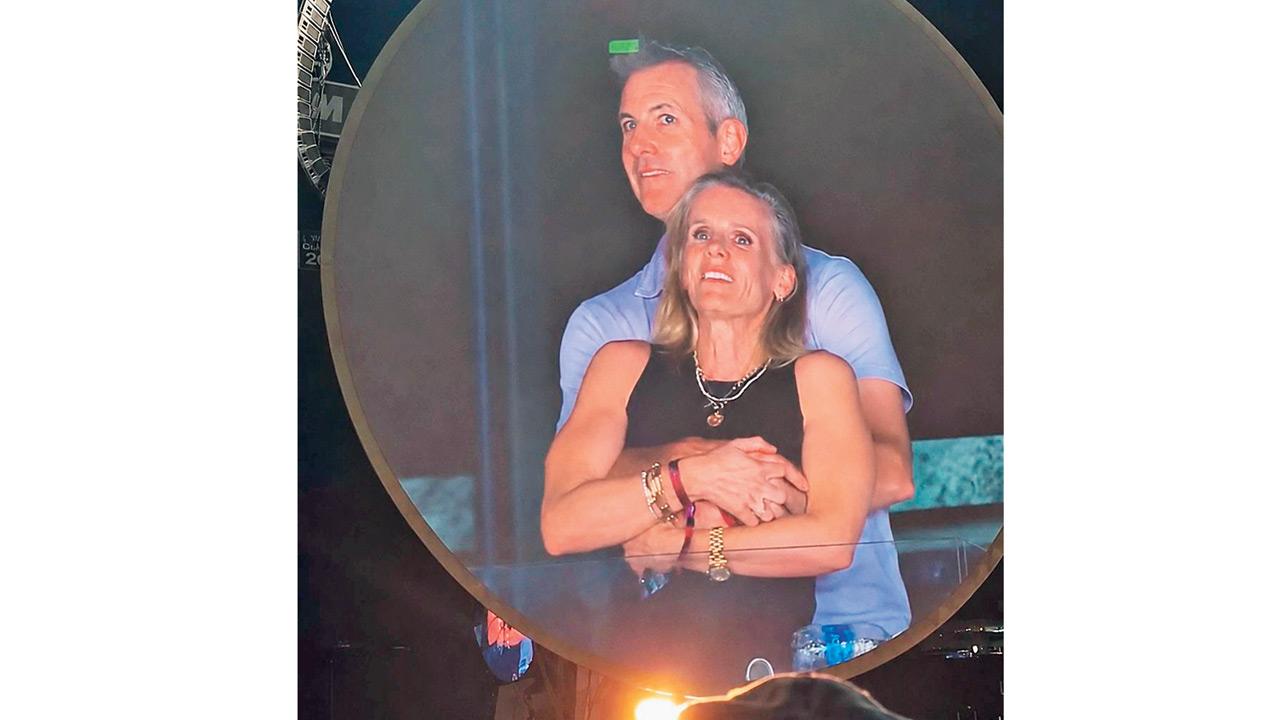
Among the terms topping the list is Coldplayed — a feeling of being romantically exposed by others without the full story being known. The word gained popularity after the infamous 2025 kiss-cam scandal at the Coldplay concert where former CEO of the AI startup Astronomer Andy Byron and HR Kristin Cabot were caught canoodling.
While these phrases may sound like fodder for Internet humour, it revealed that 39 per cent of Indian dating app users fear screenshots or personal information being shared, while 33 per cent of Indian adults actively try to keep their online life private.
Paul Keable
Love in stealth mode
This year in particular, we are focusing on discretion because so much of what we saw last year in the news — including the Coldplay kiss-cam scandal — showed that people are tired of their personal lives being judged by others and even used as entertainment,” says Paul Keable, chief strategy officer at Ashley Madison.
Keable adds that 57 per cent of the platform’s new members last year were single, signalling a growing desire to explore intimacy without public scrutiny. “People want to feel comfortable exploring an intimate relationship without worrying about the details of it being shared for others to judge. Keeping a relationship private signals that discretion is top of mind when it comes to intimate connections,” he adds.
Decode a silver lining
Relationship expert Tammy Nelson believes this fear of exposure can leave lasting emotional consequences. “When a private relationship dynamic becomes public before someone has had the chance to process it themselves, it can create humiliation, shame, overwhelm, and a deep rupture in trust,” she explains. According to Nelson, such experiences often make people hypervigilant in future relationships, constantly anticipating betrayal or exposure.
Tammy Nelson
At the same time, she argues that boundaries themselves are not unhealthy. The problem begins when emotional compartmentalisation becomes so extreme that it functions as a defence against intimacy itself.
Difference of opinion
Psychiatrist and sexologist Dr Abhijeet Holambe offers another perspective. From his experience with patients, he says men tend to prefer keeping relationships private more than women do.
“Society often conditions men to be less emotionally expressive or vulnerable,” he says, adding that many men avoid publicising relationships until they are certain about the long-term future. Holambe also points to the broader social implications of secrecy, particularly around sexuality.
A study published by the National Center for Biotechnology Information (2023) revealed that nearly 30 to 40 per cent of married men in India who have sex with men are married to women, contributing to the hidden spread of sexually transmitted diseases.
Up your dating vocabulary
>> Chaos kink: Attraction towards chaotic relationships
>> Comfort clinger: Someone who seeks hook-ups only when emotionally low
>> Easter-egging: Hiding a romance through subtle clues
>> Going Private: Sharing a relationship only with a close offline circle
>> Micro romance: Brief emotional connections without long-term pressure
>> Redline: A hard personal dating boundary
>> Rematch: Quietly reconnecting with an ex
Case study
For a Borivli-based woman in her late twenties, modern dating felt less like romance and more like handling a live wire. Though emotionally intimate, her online relationship remained deliberately undefined. Every text felt like future evidence waiting to be screenshotted, shared, or weaponised after a break-up.
Dr Abhijeet Holambe
She rewrote messages, deleted vulnerable confessions midway, and spiralled over delayed replies or the “active now” notifications. Therapy later revealed the issue was not commitment-phobia, but vulnerability-phobia — the fear of emotional visibility in a digital world where feelings can easily become permanent social currency or gossip. After continuous therapy, relationship counselling, and reducing overall social media use, her fear drastically reduced.
Inputs by Dr Abhijeet Holambe, psychiatrist and sexologist
1 in 7
Indians have lost money to online romance or dating scams. The average amount piles up to R2.7 lakh
46%
Indian women in metropolitan cities surveyed said dating apps feel safer than meeting people offline
52%
Young Mumbaikars are open to dating someone with a diverse gender, sexuality or identity
33%
Millennials also agree that dating is healthier for 18 to 25 year olds today than it was when they were of the same age
60%
Users of dating app QuackQuack hail from small towns
30%
Users of dating app Aisle are from tier 2 and tier 3 cities
Data courtesy: McAfee India, Quack Quack, Forbes, Tinder Newsroom