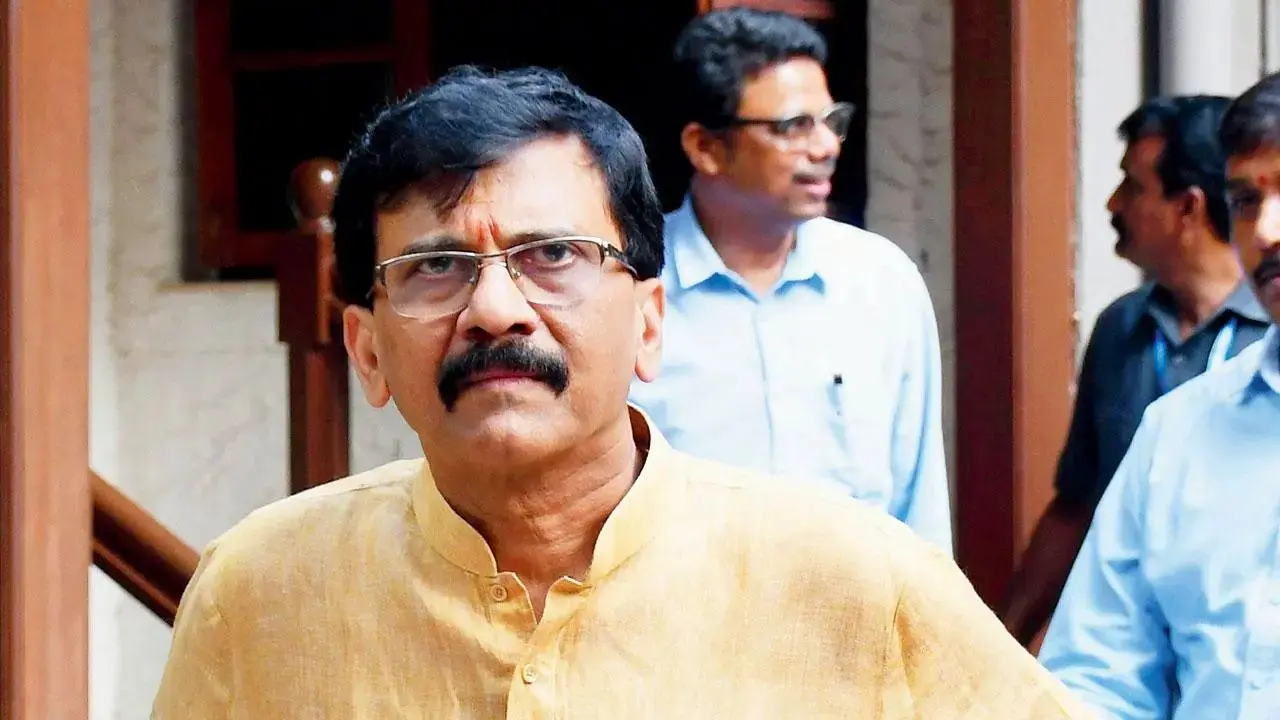
As political tempers flared over the AAP defections, Shiv Sena (UBT) leader Sanjay Raut chose a vivid mythological image, calling the Bharatiya Janata Party an insatiable “Bakasur” to underline his attack.
A day after seven Rajya Sabha MPs left the Aam Aadmi Party and moved towards the Bharatiya Janata Party, political reactions have intensified. Among those who quit were leaders like Raghav Chadha, Ashok Mittal and Sandeep Pathak. Chadha said that the group had decided to merge with the BJP, dealing a major blow to AAP.
Raut’s sharp attack on BJP: A party that can eat anything
Reacting strongly, Shiv Sena (UBT) leader Sanjay Raut compared the BJP to a mythological demon. “In Mahabharat, there is a demon called Bakasur whose hunger was insatiable. The BJP has become a party of Bakasur. It can eat anything,” he said, reported PTI.
Raut also described the leaders who switched sides as “Page 3 leaders” and claimed they were driven by fear and needed protection.
He alleged that many politicians feel pressure to join the BJP. Referring to his own experience, he said he had once faced similar pressure but chose not to switch sides. He claimed that leaders who are financially well-off often seek protection, which influences their political decisions, as per the news agency.
Raids, politics and suspicion
The Sena (UBT) leader also pointed to recent developments involving Ashok Mittal, whose business entities were raided by the Enforcement Directorate in connection with a FEMA probe. Raut suggested that such actions contribute to the political environment in which leaders decide to change parties.
Raut further intensified his criticism by saying, “Let the garbage from other parties go the BJP so that it becomes a dumping ground.”
He also made remarks about international criticism of India, adding to the political controversy. “Everyone knows about the BJP`s politics. It is shamelessness,” the Sena (UBT) leader said, adding that US President Donald Trump called India a hellhole and the BJP was showing what hell looks like, reported the news agency.
Beyond the immediate controversy, the episode reflects a deeper churn in Indian politics where defections, investigations and rhetoric collide.
(With PTI Inputs)