For Maharashtrians, it is Gudi Padwa; for Bengalis, Poila Boishakh; for Keralites, Vishu — and for the Meiteis of Manipur, it is Sajibu Cheiraoba. Or, as Khaidem Rishikanta Singh and Khundongbam Salainganba Meetei, the core organisers of the celebrations, describe it, “Doraemon’s Anywhere Door”, as they soak in the festivities that transport them back home to Manipur. After weeks of anticipation, the Meitei community in Mumbai finally gathered in Kalina on Thursday to celebrate their New Year together.
As we entered the school ground that served as the venue, the space glowed under warm string bistro lights and rustic sundowner decor. At the centre stood a huge circular pathway where people would later gather for Thabal Chongba, or the ‘Moonlight Dance’, a traditional folk dance performed during the five-day-long New Year festivities in their home state.
A Sangai print features the Manipur brow-antlered deer also known as the Dancing Deer
Community living
For many attendees, the evening carried a strong sense of nostalgia. Nearly 6,000 Meiteis live across Kalina, Vakola and Navi Mumbai, and for them, celebrations like these are the closest they come to home. “It’s unfortunate that since the pandemic I haven’t been to Manipur, but this is as close to home as it could get,” said Babyrose Hamom, a yoga practitioner who has lived in Mumbai since 2003.
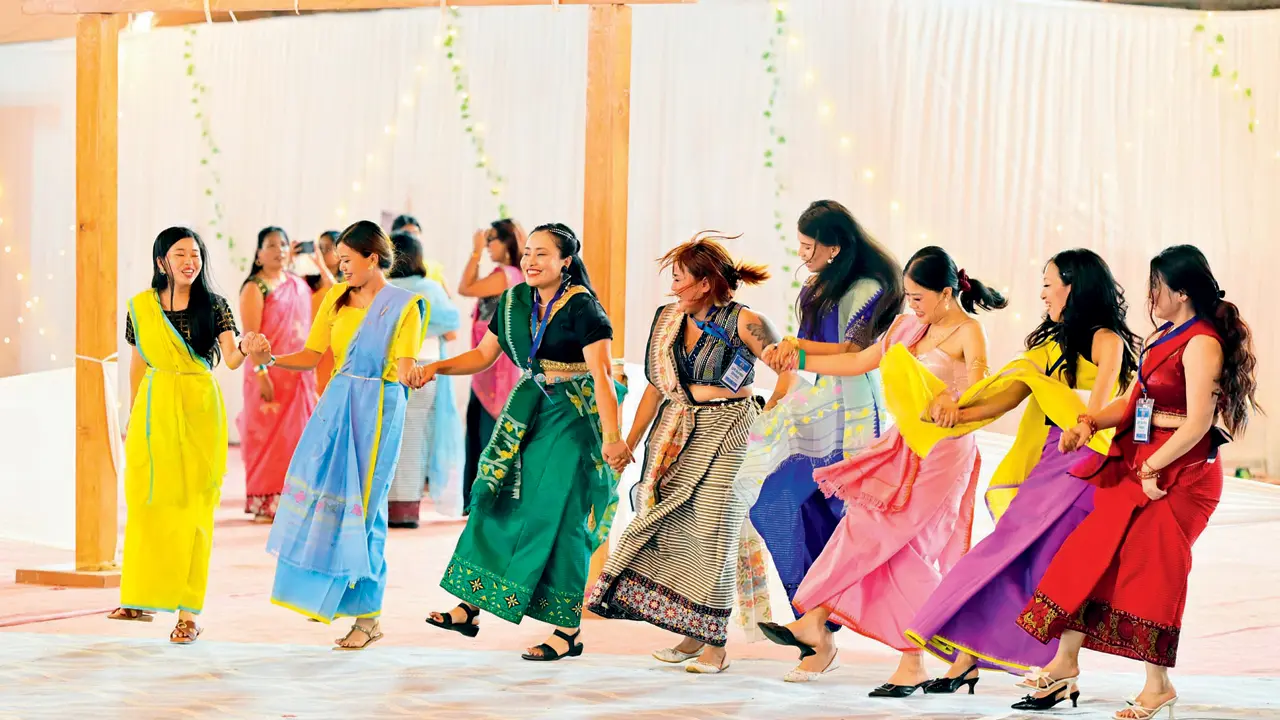
As guests slowly filled the venue, traditional Manipuri attire grabbed our eye. Women wore the Rani Phee and Phanek Mayek Naibi, recognised for their intricately embroidered Khoijao (big hook) border patterns while men arrived in an all-black ensemble paired with scarves carrying the image of the Sangai, the Manipur brow-antlered deer famously known as the Dancing Deer.
Khundongbam Salainganba Meetei and Khaidem Rishikanta Singh
Festive vibes
Explaining the significance of the festival, Rishikanta shared, “Traditionally, the celebrations in Manipur begin with Yaoshang Mei Thaba or the burning of a straw and bamboo hut. It’s a five-day festival, and on the remaining days, people play with water and colour, which is similar to the festival of Holi. The last day is something all of us dread; it is a day dedicated to sports like marathon races, football, and the unique game of papad-eating where you need to eat an entire papad without dropping a morsel,” he said, laughing while describing the elaborate celebrations back home.
Soon after, traditional folk Manipuri music coupled with catchy beats grew louder; groups of women instinctively began forming circles around the open space. Within moments, they were performing Thabal Chongba to Manipuri songs such as Thabel Esei, Nuragi Samlang and Cheiraoba Numit. Watching the dance unfold, Rishikanta chuckled, “As young boys, this was the only way we could hold hands of the girls we liked, as all of us were so shy, only the circular dance helped.”
A glimpse of the Sajibu Cheiraoba celebrations at Kalina
The nostalgia around the festival reflected the sense of community. Promila Haobijam, one of the organisers, recalled how seriously she once took the celebrations. “I remember running away from home to celebrate this festival, which resulted in my mother grounding me after the festival,” she laughs.
Singju; (right) Manipuri Chicken Curry
To our surprise, the only time people seemed to leave the dance circle was for a quick food break. One of the most crowded sections of the food counter at the venue was Meiree Mathel Chakkum by Ameka Laimayum, serving authentic Manipuri dishes such as crispy and boiled Keli Chala, a popular snack often flavoured with fermented bamboo shoot and chillies; the classic Singju salad, made with shredded veggies, herbs, fermented fish and roasted besan (gram flour), with Paknam, a savoury pancake made with besan, fresh herbs, local vegetables, and fermented fish, typically wrapped in turmeric or banana leaves, along with iced teas and cold drinks.
An attendee enjoys traditional Manipuri feast at the venue
As the celebrations continued late into the evening, we asked the organiser one final question: Why Mumbai? Rishikanta answered simply, “The city is friendly, and we usually migrate here for work or studies.”
Did you know?
. During the five-day long festival celebrated in Manipur, before the music begins, young girls go door-to-door collecting small donations from locals to help fund their neighbourhood’s Thabal Chongba. This community tradition is called Nakatheng
. Thabal Chongba wasn’t just about dancing under the moonlight, it was also one of the few socially accepted spaces where young men and women could meet, mingle, and sometimes even find a life partner