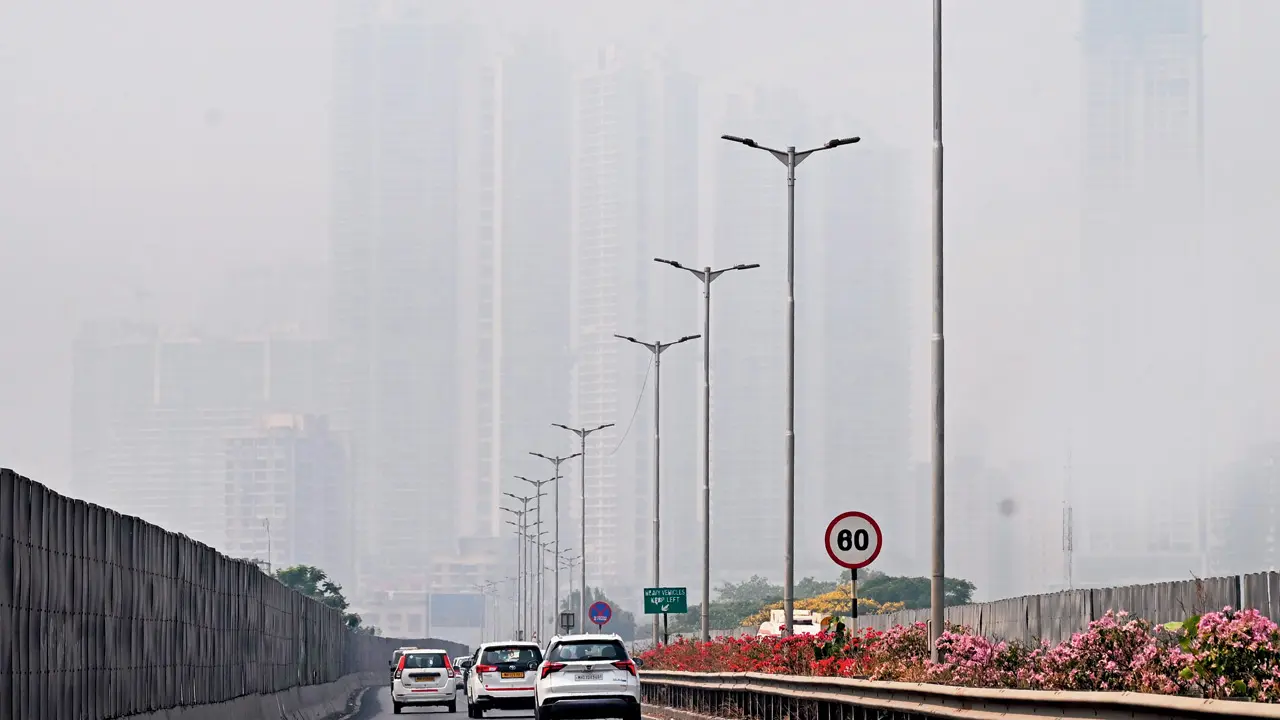
While Mumbai’s air quality index (AQI) has, on average, remained in the satisfactory category over the past two weeks — with three days recording ‘good’ air quality — experts warn that constant fluctuations since the beginning of the year are quietly impacting public health.
Medical experts say this variability is reshaping how the body responds to the environment. No longer limited to respiratory allergies, erratic AQI is now being linked to a broader range of conditions that often go unnoticed or are misdiagnosed.
From inflamed skin and irritated eyes to sudden breathing difficulties, the body’s defence system is increasingly under stress. Experts attribute this to the constant shift between ‘moderate’, ‘satisfactory’ and ‘good’ air days, exposing people to varying pollutant levels and making the immune system more reactive and unpredictable.
Respiratory impact: Where it begins
Dr Sajid Shaikh, consultant ENT specialist at Saifee Hospital
‘The very first mechanism of the body that gets affected with environmental change is the respiratory tract. While asthma and bronchitis are commonly discussed, people often overlook allergic rhinitis. That is where it begins. If not treated in time, it can lead to more serious conditions like asthma’
Dr Ankit Jain, ENT specialist at Apollo Spectra
‘Like the mind, the body adapts to a routine. When it is forced to adjust to changing AQI levels daily, it becomes exhausted. One day the lungs function easily, the next day they struggle. This constant uneven expansion and contraction puts pressure on the lungs’
Eye impact: Why symptoms are confusing
“Eyes are highly reactive to environmental changes,” said Dr Sunil Morekar, ophthalmologist at Lilavati Hospital.
“When AQI fluctuates, dryness of mucus and changes in blood flow cause the eyes to become dry. Ironically, this leads to excessive watering, which confuses patients.”
He added that reduced nasal mucus affects the eye’s ability to retain moisture, making them more vulnerable to allergens. Frequent touching or rubbing further increases the risk of infection.
Skin impact: The invisible damage
“Over the years, I have seen more patients with skin problems such as sensitivity, rashes and itching. Many also experience flare-ups of eczema despite no change in skincare routine,” said Dr Sonali Kohli, senior consultant, dermatology, Sir HN Reliance Foundation Hospital.
“The common factor is fluctuating AQI. The skin acts as a protective barrier, but frequent changes do not allow it to adjust. Pollutants like nitrogen dioxide and sulphur dioxide remain on the skin longer, triggering allergies.”
Explained: How pollution affects the skin
>> Oxidative stress: Free radicals damage skin cells and collagen
>> Inflammation: Causes redness, itching and irritation
>> Barrier dysfunction: Leads to moisture loss, dryness and sensitivity
When the skin barrier weakens, allergens can penetrate more easily. This often results in reactions to products that were previously well tolerated.
Common symptoms
>> Sudden itching or burning sensations
>> Red patches on the skin
>> Increased sensitivity
>> Breakouts or congestion
Eye care
Dos and don’ts
>> Wear protective glasses outdoors
>> Avoid rubbing eyes; rinse with clean water instead
>> Do not ignore persistent watering beyond a day
>> Avoid touching eyes unnecessarily
Skin care
What to do
>> Use a gentle cleanser to remove pollutants
>> Apply a moisturiser with ceramides and fatty acids
>> Use antioxidants such as vitamin C
>> Avoid over-exfoliation
>> Apply sunscreen daily
Mumbai AQI trend (Jan 1 to April 8, 2026) (CPCB)
49 days: Moderate
45 days: Satisfactory
3 days: Good
Know your AQI
Good: 0-50 (Dark green)
Satisfactory: 51-100 (Light green)
Moderate: 101-200 (Yellow)
Poor: 201-300 (Orange)
Very poor: 301-400 (Red)
Severe: 400+ (Dark red)