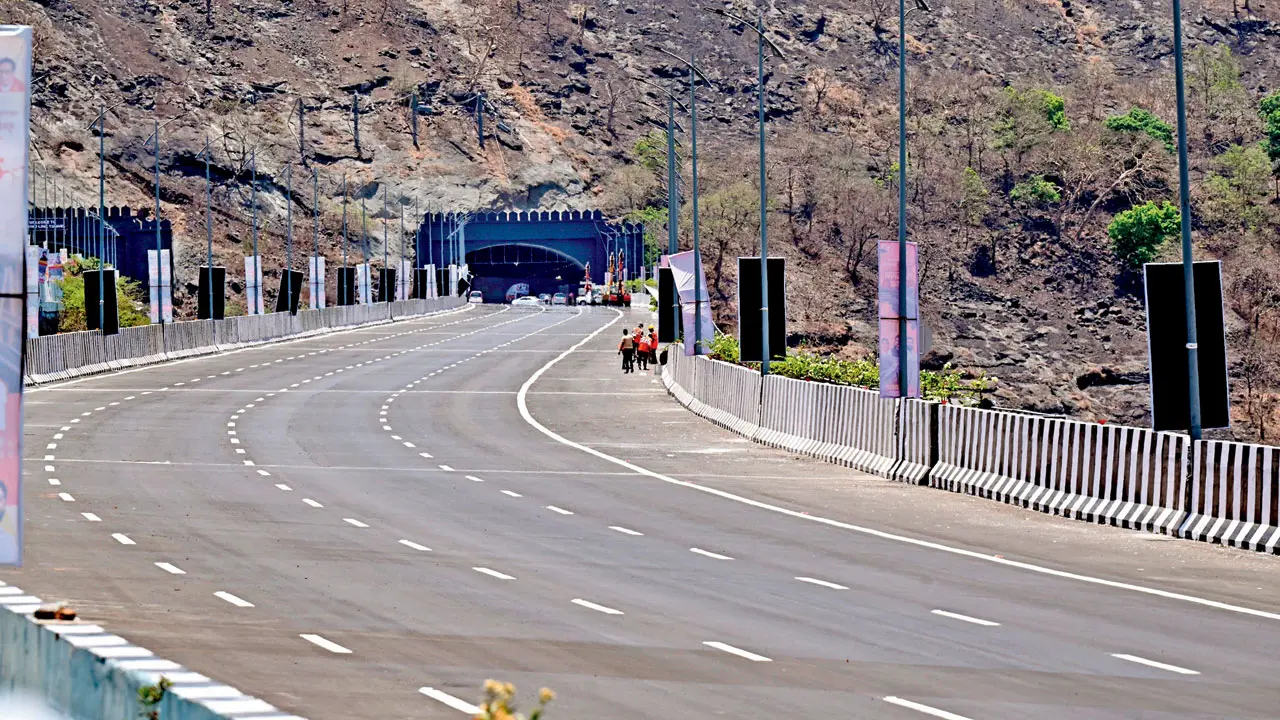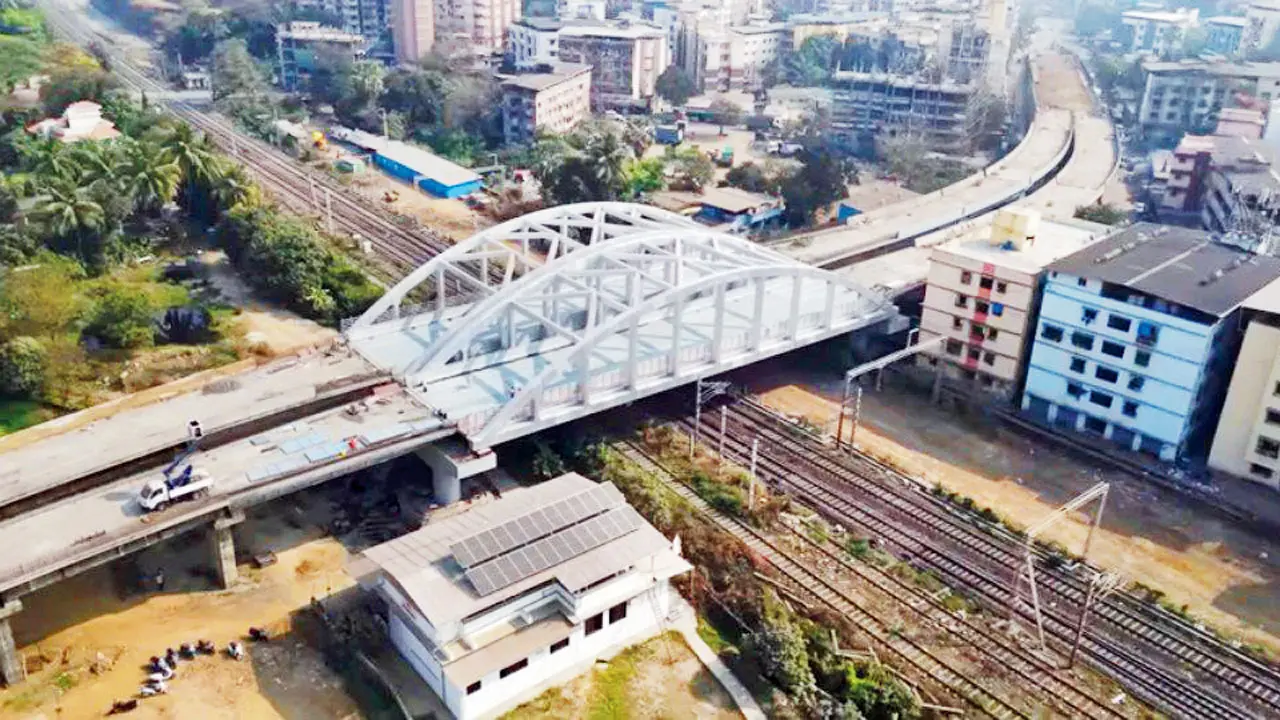
The dreaded Narangi Fatak, located just ahead of Virar station — the ultimate test of patience for motorists and train commuters alike — may finally be closing its gates soon. The new road overbridge built near it is nearing completion and may partially open for road traffic in the next few weeks. However, a few local activists are trying to delay the closure of the gate by demanding a road underbridge (subway) at the site before the gates are shut.
A truck gets stuck on the tracks while attempting to cross over. Pics/By Special Arrangement
The Level Crossing (LC) Gate has one of the highest TVU numbers (TVU is Train Vehicle Unit metric to classify the gate), and every week, there is at least one water tanker or truck that gets stuck at the crossing, detaining local and national rail traffic for 20-30 minutes.
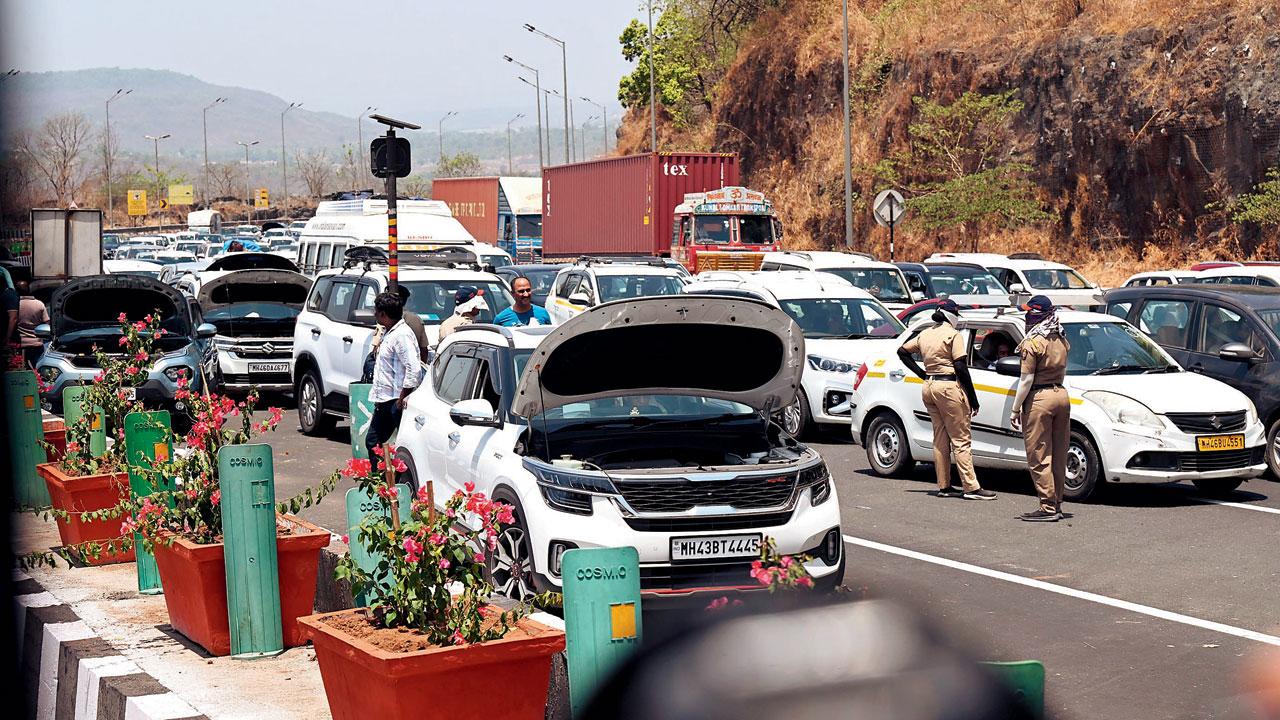
Traffic jams at the Level Crossing Gate have become a regular issue
For decades, this notorious railway crossing, officially known as LC 41 in railway parlance and simply Narangi Fatak locally (named after Narangi village in the neighbourhood), has been an absolute traffic nightmare.
LC 41
Official name of Level Crossing Gate
At least one water tanker gets stuck at the crossing every week, detaining road and rail traffic
OfficialSpeak
‘Virar township has water shortages, and the LC Gate is used by a large number of water vehicles. The pathway that crosses the rail tracks is a bit skewed with a humped surface and has gradients. Water tankers and trucks climb onto it and get stranded in the middle of the tracks, leading to the detention of local and national rail traffic. These end up having to be towed or pushed away from the tracks. This has become a weekly affair. Closing the gates will immensely help rail traffic,” a railway official said, adding that the bridge may be partially opened within the next few weeks.
The numbers
The LC Gate 41 or Narangi Fatak has a TVU of 3,43,000 per annum. The TUV (Train Vehicle Unit) is a metric used by Indian Railways to classify and manage LC Gates based on safety, calculated as (number of trains passing the stretch multiplied by the number of road vehicles per 24 hours). It measures traffic density to determine the risk level and necessary safety measures. A census is conducted every three years. High-density gates (often >20,000 TVU) are prioritised for interlocking and other such safety measures.
The project
LC gates in the Virar-Surat section, particularly along Mumbai’s Western Railway network, are being actively upgraded or replaced with road overbridges and road underbridges to improve safety and eliminate manual traffic stops. The new bowstring road overbridge at Narangi is being built as part of the quadrupling of the Virar-Dahanu section under the Mumbai Urban Transport Project-3.
Voices
‘Will bring some relief’
Adv Prathamesh Prabhutendolkar, joint secretary, Dahanu Vaitarna Pravasi Sevabhavi Sanstha
‘Closure of Narangi Phatak will bring some relief to the Vaitarna-Dahanu Road section. For a long time, Dahanu local trains had to wait 10-12 minutes for gate clearance, which often caused cascading delays for subsequent services. Removing this bottleneck should help improve punctuality and smoothen suburban operations on the section.’
‘Easier East-West commute’
Surabh Raut, infra enthusiast
‘Opening of Narangi road bridge is equally significant for rail as well as road traffic, as both have to wait for long times when either is opened. As the new bridge is a four-lane structure, local commute between Virar East and Virar West will get faster as the current lone road bridge is too congested to handle vehicular traffic in Virar. No trains would need to wait at Narangi for clearance of road traffic. There have been several instances in the past where even outstation trains were delayed for a long time waiting for clearance.’
‘Will enhance efficiency’
Virag Mhatre, railway activist
‘Closure of Narangi LC is a welcome move. The heavily used crossing near Virar often forces trains to halt due to road traffic, causing regular delays. Replacing it with a bridge will improve punctuality, especially for Dahanu-bound services, and enhance overall line efficiency.’