The Brihanmumbai Municipal Corporation (BMC) will evaluate and implement innovative ideas from citizens, housing societies and non-governmental organisations to strengthen cleanliness efforts across the city, Municipal Commissioner Ashwini Bhide said on Tuesday.
She directed officials to reinforce the existing system of daily waste collection, segregation and transportation, while also exploring new approaches to improve efficiency. Bhide suggested seeking guidance from institutions such as the Tata Institute of Social Sciences and forming dedicated study groups to develop practical solutions.
Surprise Inspection in Eastern Suburbs
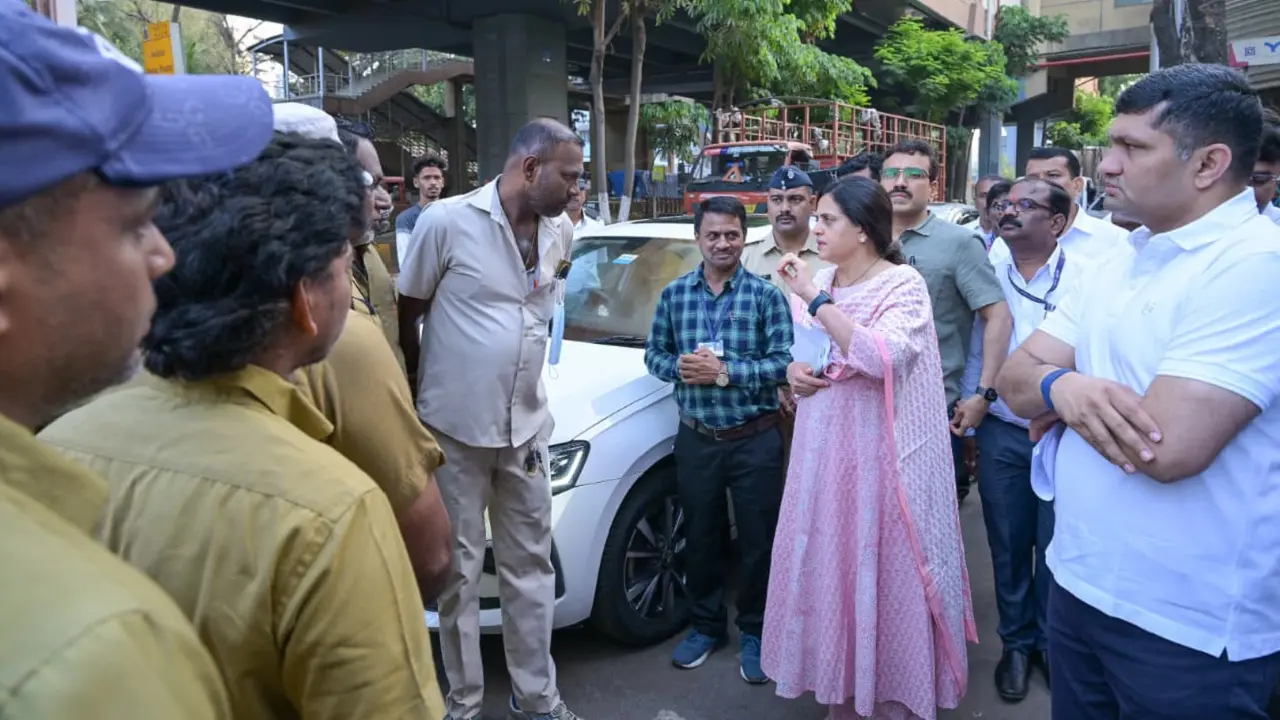
Bhide conducted an early-morning inspection on April 29 across Wadala, Chembur and Chunabhatti, reviewing sanitation infrastructure and on-ground cleaning operations.
The visit included inspections of solid waste management posts, a dry waste collection centre in Wadala, and ongoing road-cleaning work along Barkat Ali Dargah Road and Arun Kumar Vaidya Marg in Wadala East.
Officials were instructed to undertake a special drive within the next few days to clear abandoned vehicles and improve sanitation conditions along these stretches.
Focus on Waste Collection and Segregation
During the inspection, the Commissioner reviewed multiple aspects of waste management and interacted with sanitation workers to assess operational efficiency.
She sought detailed inputs on garbage collection frequency, waste segregation practices and areas generating higher waste volumes. Officials were asked to improve planning of door-to-door waste collection and ensure timely transportation.
Key areas of focus include:
– Developing independent waste management systems for large residential complexes
– Conducting awareness drives in densely populated neighbourhoods
– Strengthening ongoing cleanliness initiatives under the “Mumbai Clean League”
– Citizen Participation and Institutional Support
Emphasising the role of public participation, Bhide said involving citizens can significantly improve waste management outcomes.
She directed officials to encourage new ideas in waste handling, maintain regular communication with residents and local representatives, and involve them in cleanliness drives.
The civic body is also considering internship programmes for college students and deeper collaboration with non-governmental organisations to expand awareness campaigns.
Ward-Level Mapping and Technology Use
To improve planning, the BMC will pilot detailed ward-level mapping, particularly in densely populated and slum areas where waste generation is higher.
Bhide recommended the use of Geographic Information Systems (GIS) to enable micro-level planning, including street-wise waste collection strategies and systematic data tracking.
Officials were also asked to:
– Maintain detailed records of waste collected by agencies
– Develop scalable models based on collected data
– Install CCTV cameras at garbage dumping points on a trial basis to improve monitoring
– Feedback from Residents
During the visit, Bhide interacted with residents in Wadala, Chembur and Chunabhatti to gather direct feedback on sanitation issues as part of the “Mumbai Clean League” initiative.
She stressed the need to improve the visibility of cleanliness across key areas of the city.
Strict Action Against Violations
The Commissioner directed officials to take strict action against practices affecting cleanliness and public movement.
These include:
– Ensuring bus stops remain clean due to high footfall
– Improving cleanliness on major roads
– Removing abandoned vehicles from public spaces
– Acting against illegal debris dumping
– Taking action against unauthorised street vendors obstructing traffic
Officials Present
Senior civic officials, including deputy commissioners and assistant commissioners from relevant departments, were present during the inspection.