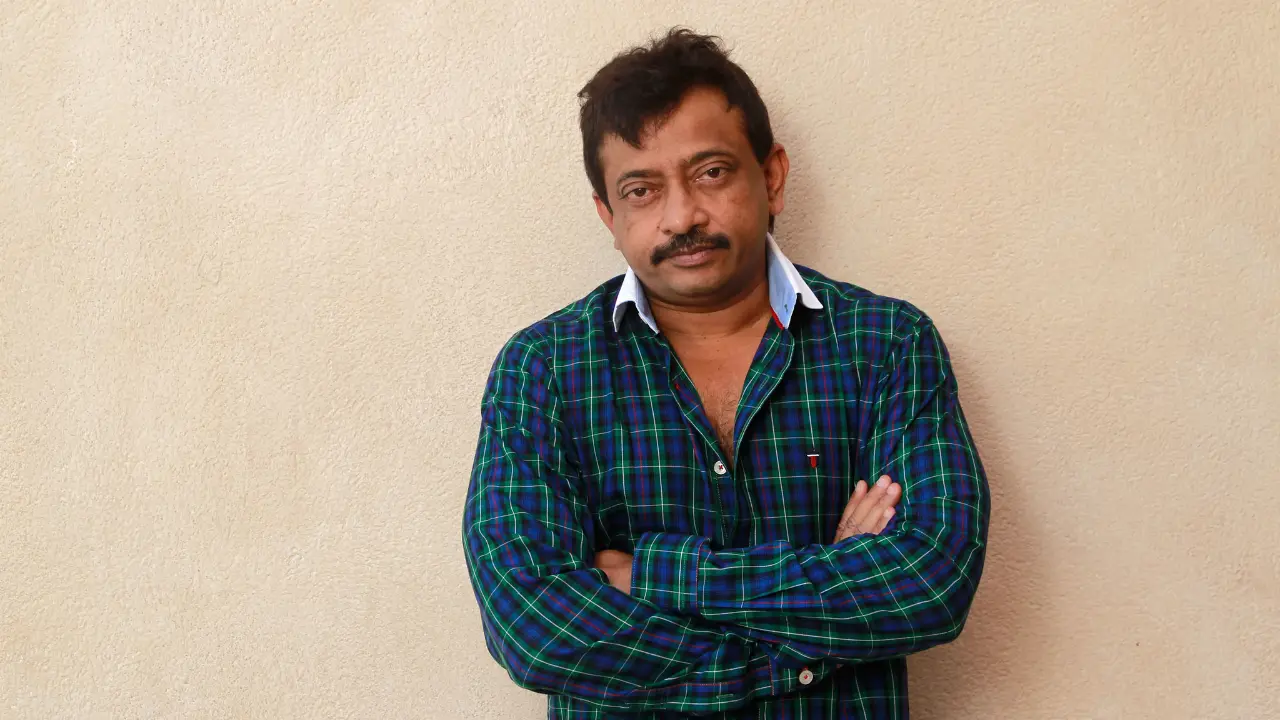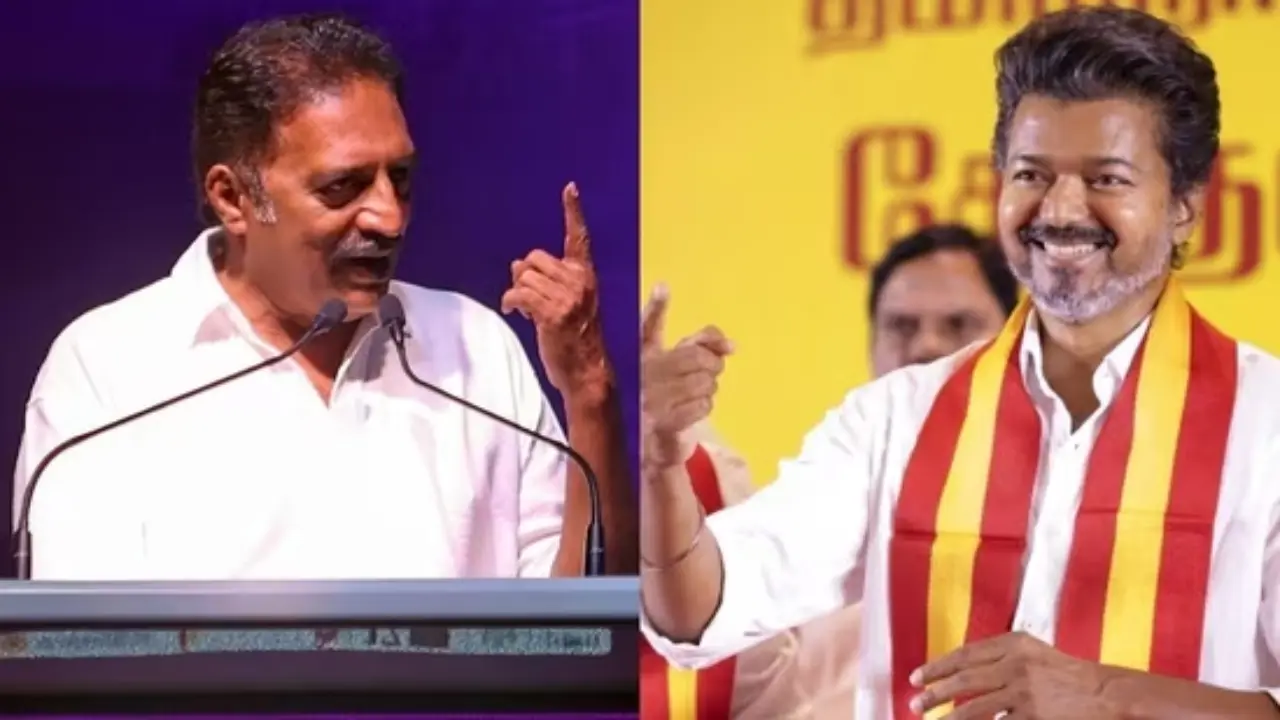
Actor Prakash Raj has sparked fresh political debate after taking a sharp dig at his Jana Nayagan co-star Vijay over what he described as a “cinema model” of politics, ahead of the upcoming Tamil Nadu elections.
While campaigning for a CPI(M) candidate in Palani, Prakash addressed a public gathering and spoke about what he called three distinct political approaches shaping the election landscape. According to him, these included the “Dravidian model,” the “slave model,” and a “cinema model,” the latter being a veiled reference to Vijay’s political entry.
Prakash Raj reacts to Vijay`s speech
In his speech, Prakash questioned the credibility of actors transitioning into politics, cautioning voters against being swayed purely by star power and fan loyalty. Without naming Vijay directly at first, he pointedly referred to “big actors” entering the political arena and relying on their screen image to gain public support. His remarks were widely interpreted as targeting Vijay, who recently launched his political party and is preparing to contest elections.
Taking a more direct swipe, Prakash reportedly suggested that admiration for a film star does not necessarily translate into leadership ability. He remarked, “I can whistle for you… but can’t give you the country,” underlining the distinction between cinematic popularity and governance capability.
The comments come at a crucial time, as Vijay through his party Tamilaga Vettri Kazhagam is positioning himself as a serious contender in Tamil Nadu politics. His transition from cinema to politics has drawn massive public attention, with large crowds attending his rallies and strong fan-driven support forming the backbone of his campaign.
All about the film Jana Nayagan
Interestingly, Prakash and Vijay share screen space in the upcoming film Jana Nayagan, which is expected to be Vijay’s final project before fully committing to politics. This overlap between their professional collaboration and contrasting political views has added an extra layer of intrigue to the ongoing discourse.
Prakash’s remarks highlight a larger debate in Tamil Nadu, where cinema and politics have historically been intertwined. However, his criticism signals skepticism about whether star appeal alone can sustain political success.
As the election approaches, the clash of perspectives between seasoned voices like Prakash Raj and emerging political figures like Vijay is likely to intensify, shaping public conversations around leadership, credibility, and the evolving role of celebrity influence in politics.