Responding to Navjot Altaf’s Waste Archives as Landscape that is currently underway at the Jehangir Nicholson Art Foundation (JNAF) Gallery, two performance practices will unfold as meditations on how bodies absorb, resist and reflect shifting environments.
For choreographer and dancer Sanjukta Wagh, Body Excavations resists conventional narrative altogether. “It’s actually not a play,” she says. “It is three excerpts from my early works which use the body as a primary mode of narrative.” Drawing from earlier pieces, including The Rage and Beyond: and Iravati’s Gandhari and Putana and I, the work assembles fragments rather than a linear storyline, allowing meaning to surface through movement and sensation.
Nisha Abdulla. Pic courtesy/Nisha Abdulla
At its core lies a compelling metaphor: the body as landscape. “I’m treating the body as land,” Wagh explains. “As land gets excavated, the piece tries to excavate the body.” Incorporating a Native American poem by Joy Harjo alongside mythological figures like Gandhari and Putana, the performance moves across personal, political and archetypal registers. “It’s a very circular, breath-led piece,” she adds, inviting audiences into an immersive, shared experience. “I look at the audience as sahridaya — where our hearts beat together… something will definitely shift.”
Sanjukta Wagh at a rehearsal in a studio in New York. Pic courtesy/Sanjukta Wagh
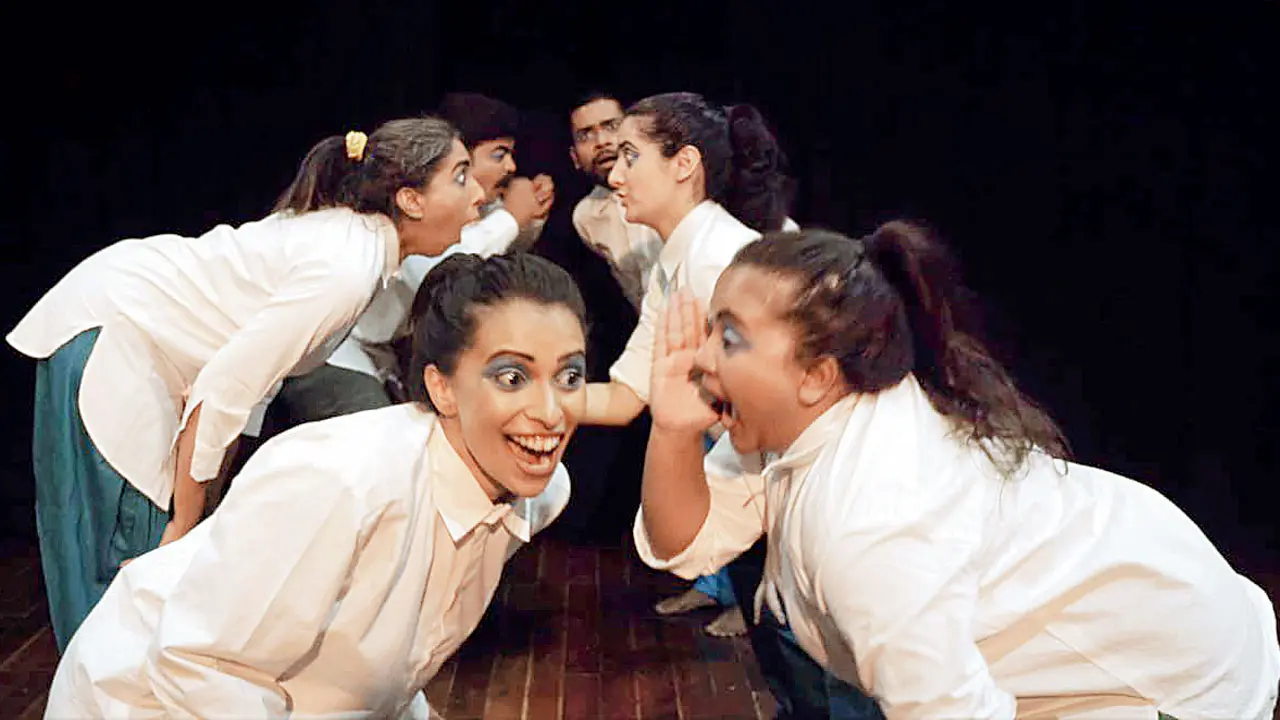
In contrast, theatre-maker and performer Nisha Abdulla approaches performance through text and satire in Antigone Refuses to Die. Reworking Antigone, she reframes the tragic heroine as a contemporary political dissident who resists martyrdom. Instead of inevitable sacrifice, Abdulla’s Antigone navigates systems of power with sharp wit, interrogating “the blurred lines between justice, spectacle and control.” This dramatised reading of a work is its first public staging.
Her reading foregrounds language and voice, using irony and defiance to challenge dominant narratives around resistance. By refusing the trope of the noble martyr, Abdulla opens up space for more complex, ambivalent forms of dissent — ones that question not only authority but also the ways in which resistance itself is staged and consumed.
Together, Wagh and Abdulla extend Altaf’s inquiry beyond the visual, offering two contrasting yet complementary approaches — one embodied and immersive, the other textual and incisive. If Wagh turns inward to excavate the body as terrain, Abdulla looks outward, dissecting the politics of visibility and voice, creating an evening that is as reflective as it is unsettling. Presented at the JNAF Gallery, the space, dense with visual histories, becomes an active collaborator, shaping how audiences encounter movement and text.
ON Today, 6 pm onwards
AT JNAF Gallery, CSMVS, MG Road, Fort.
ENTRY Free (Museum tickets prices apply)