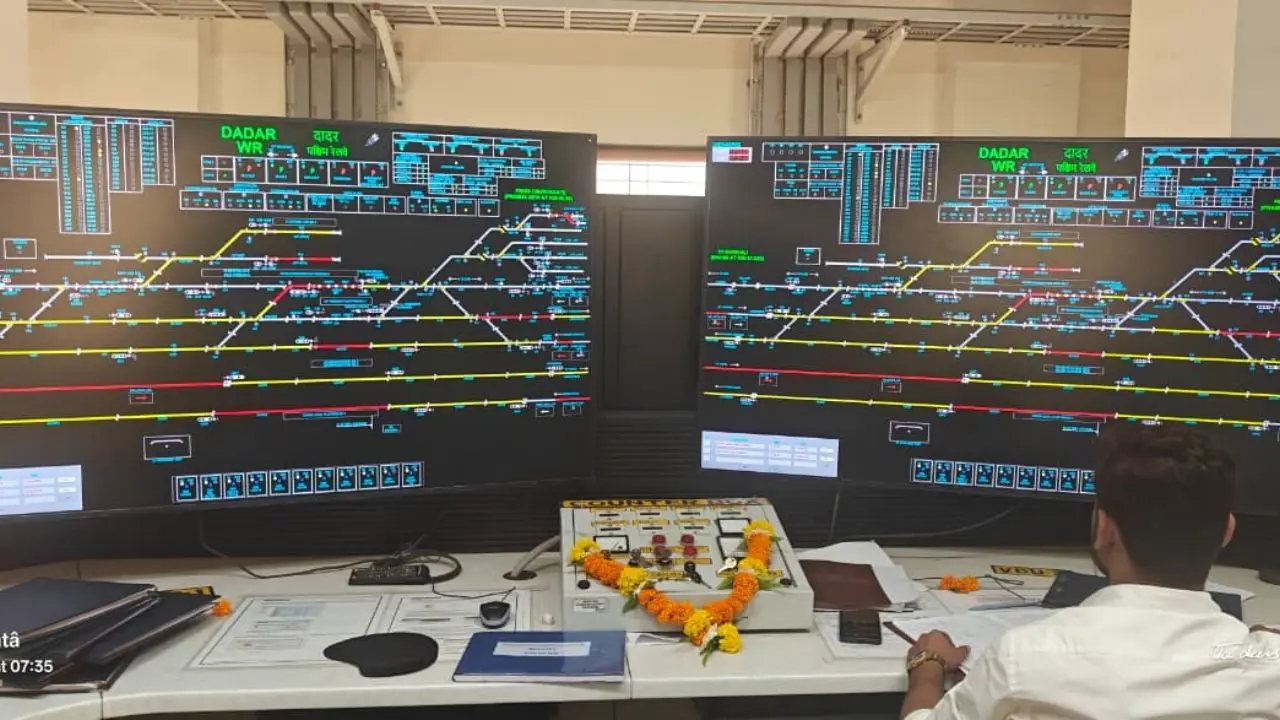
Western Railway (WR) has successfully switched Dadar station’s signalling system from a 34-year-old conventional panel interlocking setup to a modern digital system. The commissioning marks a major milestone in the modernisation of Mumbai’s suburban railway network.
Dadar station was earlier operating on a panel interlocking system installed in 1992, which has now been fully replaced by an advanced electronic system.
This upgrade is part of Western Railway’s broader push toward digital transformation of signalling infrastructure. The modern system is expected to deliver faster fault detection, fewer delays and improved reliability for suburban rail commuters in Mumbai.
New Siemens electronic interlocking system becomes operational
The upgraded system features the Siemens WESTRACE MK2 Electronic Interlocking (EI) system with distributed architecture. It is now fully operational and significantly enhances safety, reliability, flexibility and maintainability of train operations at Dadar.
The system supports 103 operational routes, enabling smoother and more efficient train movement at one of Mumbai’s busiest railway junctions.
Why Dadar?
Dadar station is a key Mumbai suburban interchange. It serves as a crucial point between Western Railway, Central Railway, and the upcoming metro corridors. It connects the northern and southern parts of the Mumbai Metropolitan Region (MMR) and handles lakhs of commuters daily.
The upgrade is expected to improve operational efficiency at this high-traffic hub.
Enhanced safety and redundancy features
The newly commissioned Electronic Interlocking building is equipped with advanced systems, including:
- Siemens WESTRACE MK2 interlocking system
- Dual detection systems (Siemens ACM 200 and AFTC)
- Two Integrated Power Supply (IPS) systems with auto changeover
- Data loggers and Train Management System (TMS)
- Fuse changeover arrangements
- Full redundancy provisions for uninterrupted operations
These features ensure improved safety, reduced failures, and continuous train operations even during technical issues.
Smooth execution by railway engineering teams
The commissioning work was successfully executed under the dynamic guidance and leadership of Dy. CSTE/C/CCG Shri Meethalal Meena, whose continuous monitoring, technical support, and strategic planning ensured smooth execution of the work within the stipulated traffic block period. His dedicated efforts and coordination played a crucial role in achieving the successful commissioning without affecting operational safety.
Railway engineers, supervisors, and field staff ensured smooth execution without impacting operational safety or passenger services. Officials credited strong coordination and technical planning for the successful transition.