Standing for two millennia, in the city of Chhatrapati Sambhajinagar (formerly Aurangabad), are the man-made Ajanta Caves. We learn in Magnificent Murals: Buddhist Art of Ajanta (Tulika Books), written by Ashwin Prabhu, that during the monsoon season, the caves offered shelter to the travelling Buddhist monks. Before they were built, the monks would wait in the natural hollows for the rain to subside.
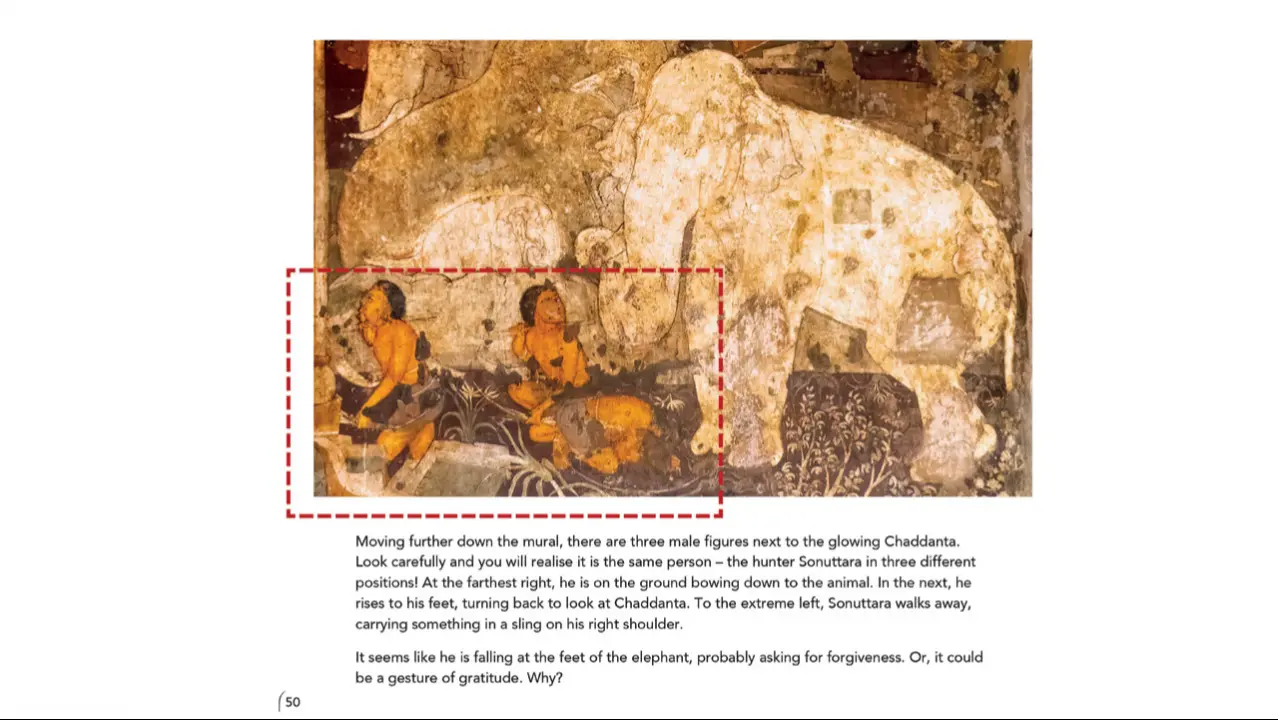
The line drawing makes it clear that he’s carrying a tusks. Pics courtesy/Tulika Books
Prabhu outlines, with clarity, all that readers must know about this historic wonder: when the caves were built, the different kinds of structures, the stories that the paintings tell, the oral instructions on conduct for monks, and a detailed account of the life of Buddha through the murals.
Ashwin Prabhu
One of the most interesting segments in the book is its illumination of the varying styles of the paintings. The differences emerged as they were completed in two phases separated by 400 years. We find out about the murals in the chaityas of caves 9 and 10 and the damage they’ve endured, being the oldest ones at the site.
Interestingly, the newer murals form a zigzag pattern, instead of a left-to-right chronology. The line drawings alongside old murals help us make sense of the stories that have faded now. Further, the photographs of the sculptures and paintings captured by Srinivasan Krishnan Rajagopalan entice us to book a ticket to visit this architectural marvel.
On April 12 (author talk); 11 am
AT Chhatrapati Shivaji Maharaj Vastu Sangrahalaya, Mahatma Gandhi Road, Fort.
Log on to @csvmvmumbai