The installation of a trap cage to capture a leopard in Malad East, triggered solely by a sighting inside a housing society, has raised questions over the forest department’s response.
As per protocol, leopards or tigers are typically trapped only in cases of confirmed human-animal conflict or when the animal is stranded in a human-dominated landscape with no safe escape. Such action also requires approval from senior wildlife authorities like the principal chief conservator of forests (wildlife) or the chief wildlife warden.
Recent sighting
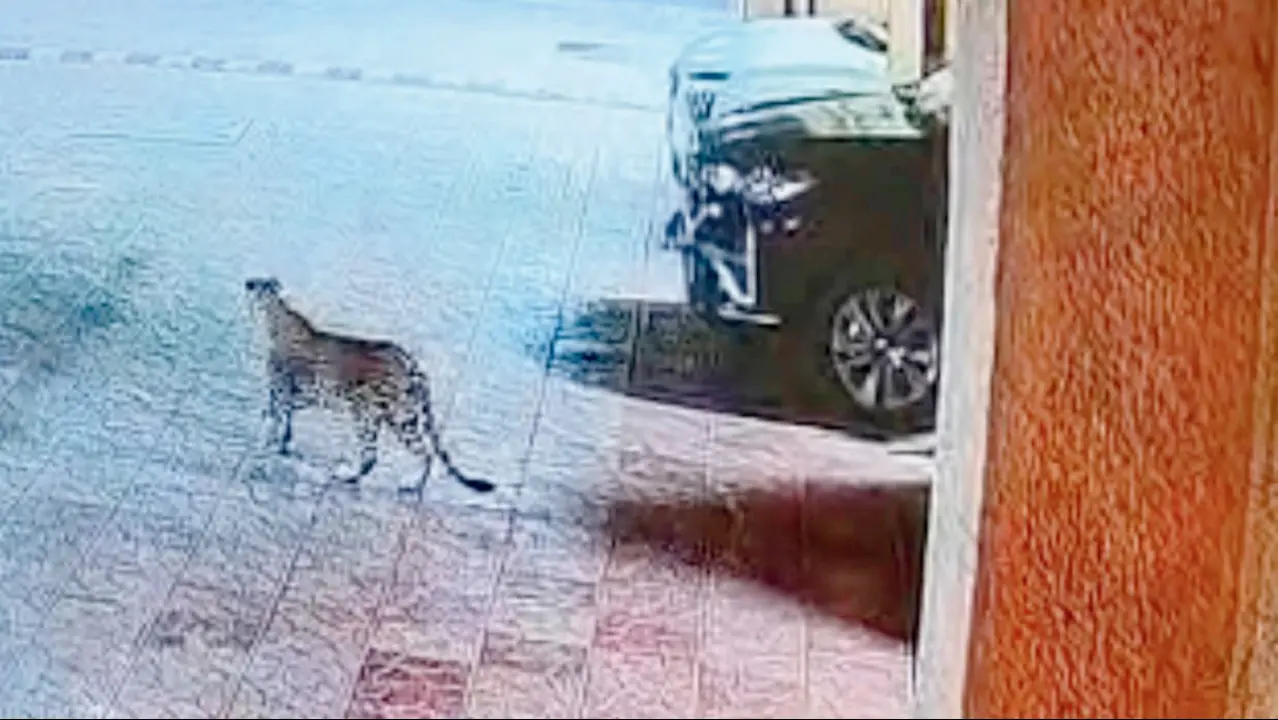
A few days ago, a leopard was spotted in the parking area of Raheja Heights, a residential society in Malad East. Residents alerted local representatives and the forest department.
Official response
A team from Sanjay Gandhi National Park (SGNP) was immediately deployed for assessment and monitoring. The area was surveyed, and camera traps were installed to track movement. The rapid response team has been patrolling regularly, and residents were advised to avoid venturing out alone in the dark, ensure proper lighting, and not leave pets unattended.
Pressure claim
Sources from the forest department told mid-day that a trap cage has been installed near the society, citing pressure from local leaders and public representatives.
Expert view
Wildlife conservationist Kedar Gore said, “It is unfair that a leopard is subjected to the trauma of being captured, whereas rabies-spreading stray dogs are moving freely on the streets. The latter is potentially more dangerous for people.”
“Even if a leopard gets trapped, another may occupy the area. Instead of knee-jerk reactions to public pressure, urgent steps must be taken to manage stray dogs, which are the primary reason leopards enter human habitats. Unless this issue is addressed, the risk will persist. People living on the fringes of SGNP must accept coexistence,” he added.
Honorary Wildlife Warden and Resqink Association for Wildlife Welfare president Pawan Sharma said, “On the periphery of SGNP, new residential societies have increased human and animal presence. Leopards may have always used these areas, but are now reported more due to CCTV and population growth. Humans and leopards have coexisted in Mumbai with minimal conflict for decades and should continue to do so.”