
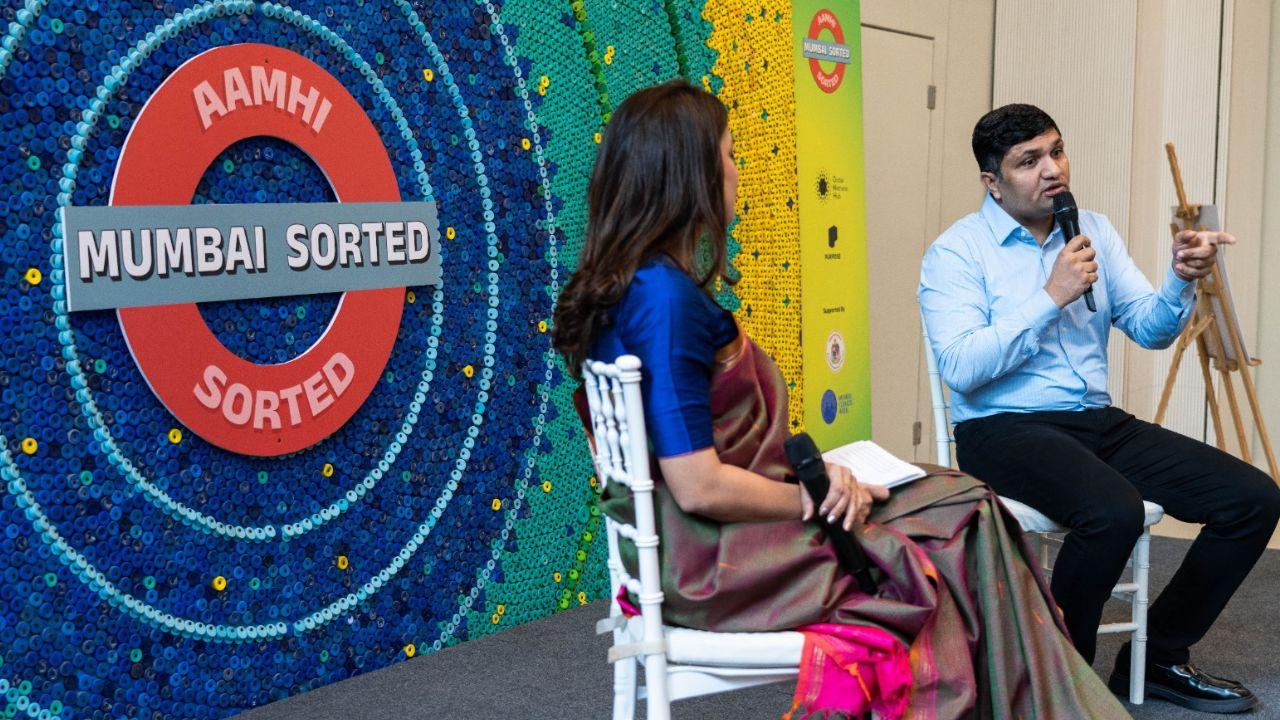
As part of Mumbai Climate Week 2026, city leaders, municipal officials, practitioners, waste workers, and civil society organisations came together on February 14 at the Museum of Solutions (MuSo), Lower Parel, Mumbai.
With Mumbai generating over 7,000 metric tonnes of waste every day, the attendees at the Museum of Solutions (MuSo) charted a roadmap for scaling up waste solutions that are already working on the ground.
The main agenda of the meeting was about, how Mumbai can expand successful waste segregation and management practices citywide.
As per the officials, key highlight was a candid conversation between Freishia Bomanbehram and Deputy Municipal Commissioner (Solid Waste Management) Kiran Dighavkar.
Dighavkar underscored that meaningful behavioural change in waste management rests on three pillars that are strong regulatory system with monitoring, responsible citizen participation, and robust community-based organisations acting as bridges between people and institutions.
He further noted that Mumbai has already seen successful collaborations delivering tangible results but emphasised the need to transition from small pilots to durable, citywide systems.
As part of this push, the BMC is strengthening its collection infrastructure. Green waste collection vehicles, previously open at the rear, are being redesigned into fully enclosed units, introduced in new colours and dedicated exclusively to collecting kitchen and wet waste to improve segregation efficiency.
Grassroots innovations for better waste management
In view of strengthening waste management in Mumbai, the event also showcased scalable, on-ground solutions from various organisations which are working on household segregation tools, behavioural shifts among residents, and live demonstrations for homes and institutions.
Furthermore, the discussion highlighted landfill dependence, methane emissions, and the role of waste workers in creating resilient urban systems.
Methane and the climate imperative
Speakers emphasised that the waste sector is a major source of human-driven methane emissions, largely from decomposing organic waste in landfills. Methane, over 80 times more potent than carbon dioxide in driving short-term climate change, makes improved waste segregation critical for climate mitigation.
Manjyot Kaur Ahluwalia, Asia Regional Lead at GMH, while speaking about waste management, said that rising incomes have distanced citizens from their waste footprint, stressing the need for ownership and dignity for waste workers.
Mandira Kalaan of Purpose India added that initiatives such as the Aamhi Sorted Mumbai The sorted campaign demonstrates how data, culturally relevant communication and empowered local governments can reduce landfill dependence.









%20hits%20out%20at%20Sapkal,%20BJP )
