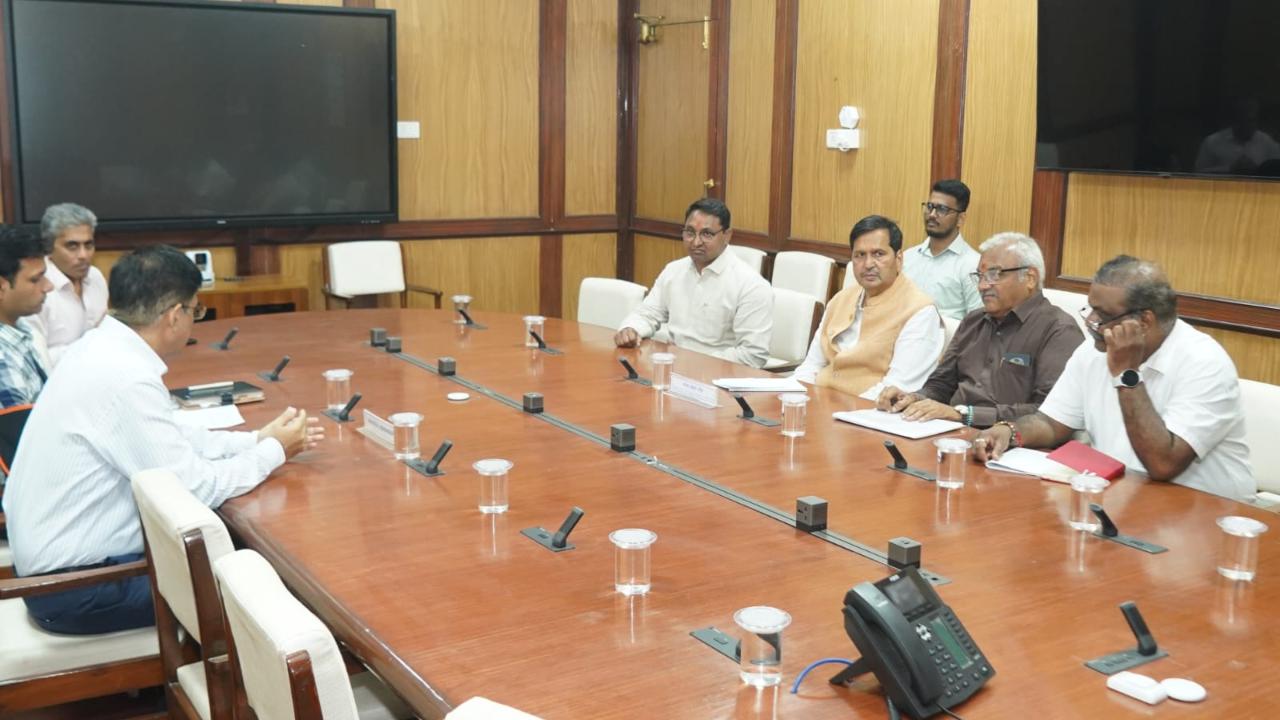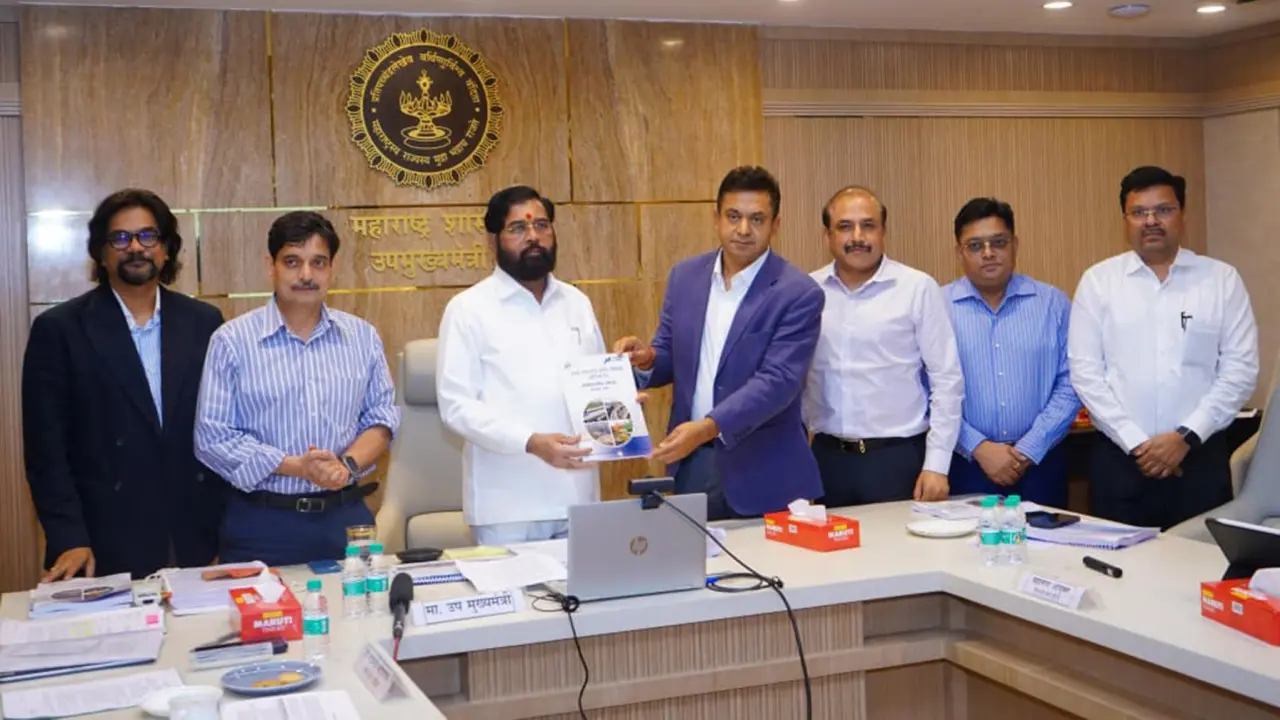
The Mumbai Metropolitan Region Development Authority (MMRDA) on Monday unveiled its surplus budget for 2026-27 with a total outlay of Rs 48,072.57 crore, with plans for metro expansion, growth hubs and climate-resilient Mumbai.
The announcement marks its first surplus budget since 2017-18.
With estimated receipts of Rs 48,072.57 crore and proposed expenditure of Rs 48,072.40 crore, the authority projects a surplus of Rs 17 lakh, reflecting a decisive financial turnaround, an official statement said.
It said that this surplus follows three years of recovery after a Rs 7,468 crore deficit in 2024-25, signalling fiscal stability and improved revenue mobilisation through land monetisation, the Urban Transport Fund, project-linked revenues, and institutional financing.
The budget demonstrates a strong development-first approach, with Rs 42,026.14 crore — 87 per cent of the total expenditure — allocated to infrastructure projects, the statement said.
Maharashtra Chief Minister Devendra Fadnavis said the budget reflects global investor confidence and positions Mumbai as a modern, investment-ready region.
The budget is 58.57 per cent higher than the revised estimate of Rs 30,316.18 crore for 2025-26, highlighting MMRDA’s commitment to large-scale urban development, the statement said.
Deputy Chief Minister and MMRDA Chairman Eknath Shinde noted that the 87 per cent allocation demonstrates accountable governance under the Growth Hub framework.
Mega infra projects and underground corridors planned
The statement said that the MMRDA has planned mega infrastructure project and underground corridors including:
– High-capacity underground tunnels are being developed to decongest the city:
– Orange Gate-Marine Drive Coastal Road Tunnel – Rs 1,250 crore
– Thane-Borivali Four-Lane Tunnel – Rs 3,029.51 crore
– Mumbai Integrated Tunnel (BWSL-BKC-HSR-T2) – Rs 1,189 crore
-The total allocation is Rs 5,543.51 crore, official statement said.
Arterial roads and expressways
The budget supports multi-ring roads and elevated corridors to redistribute traffic:
– Worli-Sewri Elevated Corridor – Rs 936.07 crore
– Mumbai-Vadhavan Expressway Corridor – Rs 2,000 crore
– Eastern Freeway Extensions – Rs 1,106.75 crore
It said that the total allocation for these are Rs 12,816.53 crore.
Metro network expansion
MMRDA continues India’s largest metro expansion project:
– Metro Line 4 (Wadala-Kasarvadavali) – Rs 3,630.71 crore
– Metro Line 5 (Thane-Bhiwandi-Kalyan) – Rs 1,309.30 crore
– Metro Line 6 (Swami Samarth Nagar-Kanjurmarg) – Rs 2,407.78 crore
– The total allocation is Rs 13,838.88 crore in the budget for these, the statement said.
Social infrastructure and sustainability
The MMRDA has also planned projects for social infrastructure and sustainability, these include:
– Slum Rehabilitation and Housing – Rs 731.33 crore
– Water Supply & Regional Sustainability – Rs 980.87 crore
– Climate Resilience & Green Infrastructure – Rs 250 crore
– Iconic Memorials (Dr. Babasaheb Ambedkar, Balasaheb Thackeray) – Rs 571.50 crore
– IT and Digital Governance – Rs 235.34 crore
Growth hubs and economic decentralisation
Under the Mumbai 3.0 initiative, Rs 4,000 crore is allocated to the KSC New Town Growth Hub, with additional funding for Raigad Pen and Kharbav business parks, supporting structured urban expansion, employment creation, and global investment.
Revenue and fiscal strategy
MMRDA’s revenue streams include:
– Land Sale – Rs 11,177.95 crore
-Urban Transport Fund – Rs 6,368.42 crore
– Borrowings – Rs 23,711.16 crore
– Government Grants and TDR – Rs 1,189.14 crore
– Ground Rent and Interest – Rs 1,664.19 crore
“The budget reflects disciplined fiscal planning, debt management, and structured capital mobilisation,” the official statement said.
A turning point for MMR
It said that the 2026-27 budget combines fiscal prudence with massive infrastructure deployment at MMR, signalling:
– Financial stability after years of deficits
– Acceleration of mobility corridors
– Implementation of Mumbai 3.0 and Growth Hubs
– Strengthened water and climate resilience
– Decentralised economic growth