Across India’s tribal and folk traditions, art continues to evolve quietly, shaped by shifting environments, materials, and ways of life. Metamorphosis II, an exhibition curated by postgraduate students of Post Graduate Diploma in Museology and Conservation at the Chhatrapati Shivaji Maharaj Vastu Sangrahalaya (CSMVS), brings this ongoing transformation into focus. It situates these practices within lived contexts, where artisans create not for recognition but as part of ritual, utility, and community life, with knowledge passed down through observation and repetition.
As we proceed towards the Premchand Roychand Gallery, curator Nilanjana Som explains the significance of the exhibition as it enters its second year. The students are first taught how to curate an exhibition alongside choosing the theme. The opening section welcomes visitors with the Cham masks by Chhemet Rigzin and Stanzin Chokdup, made entirely of clay, with nine masks emoting different expressions from peaceful to wrathful.
Nilanjana Som
Som elaborates, “These traditions have never been frozen in time; they have always responded to shifts in environment, material availability, and social structures. What we are witnessing today is not a break from tradition, but a continuation of its inherent adaptability — an ability to absorb change while retaining its cultural core.”
Organised into three sections — Faith’s Formative, Nature’s Narrative, and Craft’s Creative — the exhibition traces how traditional art forms respond to changing social and economic realities while remaining truly rooted in their origins.
TILL May 31; 10.15 am to 6 pm (Wednesdays closed)
AT Chhatrapati Shivaji Maharaj Vastu Sangrahalaya, Kala Ghoda, Fort.
CALL 69584400
ENTRY Museum ticket prices apply
The Guide’s top picks
Guru Rinpochey and Guru Dorje Drolo
The Cham masks by Chhemet Rigzin and Stanzin Chokdup: The opening section explores faith formation through the ritual use of Cham masks in Ladakh. Worn during the sacred Cham dance, these masks anchor a deeply spiritual performance. As monks wear the masks, they embody the timeless triumph of good over evil.
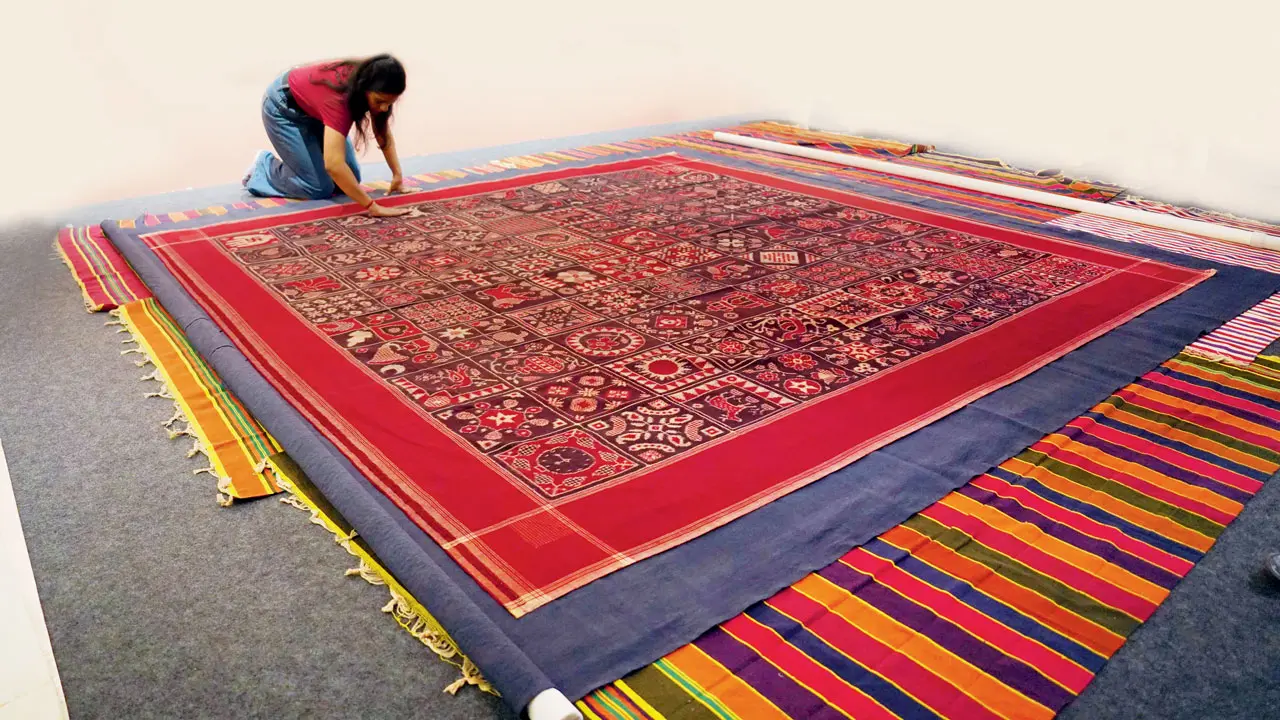
100-motif Telia Rumal by Gajam Govardhana: The Telia Rumal, which originates in Telangana, is defined by intricate geometric grids and stylised motifs, created with natural dyes and oil-treated cotton that gives the cloth its distinctive scent and softness. Woven using the complex double ikat technique, both warp and weft threads are resist-dyed to achieve precise, rhythmic patterns.
Symbol of Unity by Arjan Singh: This Bhujodi textile is crafted with natural dyes and interlocking techniques that reflect community cohesion and shared heritage. Its motifs — such as Chaumukh, Dholki, and flowing patterns like Sathkani and Wankia — express protection, festivity, and movement within the Vankar weaving tradition.
Tholu Bommalata showing Ramayana scenes by Sindhe Siva: This painted leather panel illustrates key Ramayana episodes in this shadow-puppetry tradition of Andhra Pradesh. Crafted from treated and perforated goat skin, the sequential composition guides the narrative through major scenes from Sita’s abduction to the final battle.