Along Mumbai’s busy coastline lies a world that often goes unnoticed. Between the tides, marine life quietly thrives, crabs scuttle, anemones bloom from the sand, and starfish leave patterns behind.
Despite pollution, plastic waste, and constant human activity, these species continue to survive, adapting to an increasingly hostile environment.
Biologist Dr Abhishek Nandkishor Neelam Satam has documented this hidden ecosystem through photographs captured along Mumbai’s shores.
Marine life is most visible during low tide, typically in the early morning or late evening. Key locations include Bandra Bandstand rocky shore, Haji Ali, Carter Road, Priyadarshini Park, and Juhu.
Species along Mumbai’s coast
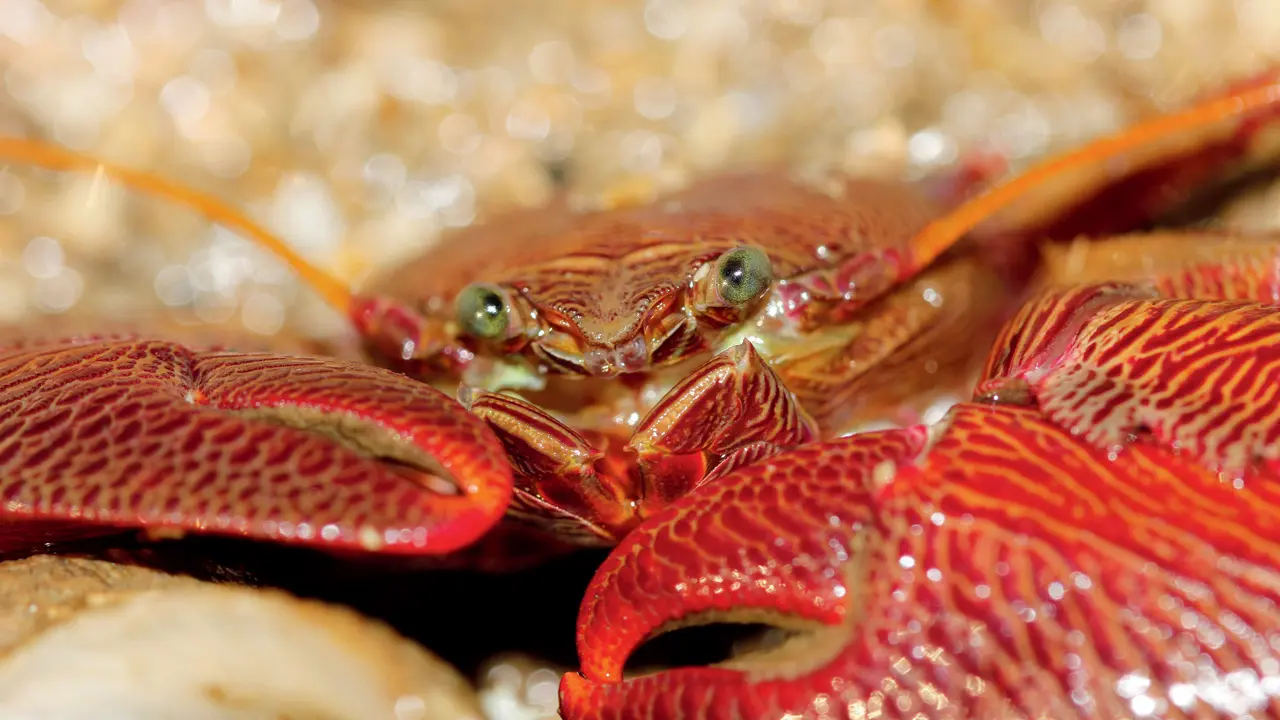
Porcelain crabs
Porcelain crabs, small and delicate in appearance, are among these survivors. When threatened, they can shed their limbs to escape predators and regenerate them later through moulting. Despite their name, they are not true crabs. They belong to a group called Anomurans, or “false crabs”, shaped by an evolutionary process known as carcinisation. They have only three pairs of walking legs, with a reduced fourth pair tucked near the body.
Did you know?
Porcelain crabs can drop their limbs to escape danger and grow them back later.
Where to spot marine life
>> Bandra Bandstand rocky shore
>> Haji Ali
>> Carter Road
>> Priyadarshini Park
>> Juhu
Best time: Early morning or late evening during low tide
Zoanthids
This image, captured near Priyadarshini Park at night, shows glowing zoanthids against the city’s skyline, highlighting the contrast between urban life and marine ecosystems. Through beach walks and photography, Satam aims to raise awareness about this fragile yet resilient ecosystem.
Did you know?
These small, flower-like animals grow in colonies on rocks.
Feather duster worms (Sabellidae)
These marine worms build tube-like structures using sand and shell fragments. Their feathery appendages extend outward to capture food particles from the water. The image captures feather duster worms alongside zoanthids, showcasing the coexistence of multiple species in polluted coastal zones. Despite increasing sewage and plastic waste, such marine habitats continue to survive.
Did you know?
These worms live in tubes and use feather-like structures to feed.
Gastropod (Spiral melongena)
During one marine walk, participants witnessed a rare moment — a gastropod laying eggs along the shore. The sight highlights how extraordinary marine life exists alongside the city, often unnoticed.
Did you know?
This sea snail lays visible egg clusters along the shore.
Starfish
A starfish moving across the sand creates natural patterns, turning the shoreline into a living canvas. These slow-moving creatures are known for their ability to regenerate lost limbs.
Did you know?
Some starfish can regrow their arms if damaged.
Sponges
Sponges growing along the coast resemble vertical structures, drawing comparisons to the city’s skyline. Though sensitive and typically found in clean water, these organisms have adapted to survive in polluted conditions.
Did you know?
Sponges are animals that soak in water and filter out food to survive.
White beauty sea slug (Goniobranchus trimarginatus)
This striking sea slug, first described from Mumbai, is considered rare and is usually seen between March and May. Spotting it outside this period, especially in winter, makes the sighting unusual and significant.
Did you know?
This colourful sea slug appears only during specific times of the year.
Pearly sand anemone
On the sandy stretch of Girgaon Chowpatty, the pearly sand anemone survives beneath the surface. About the size of a palm, it buries its body in the sand, with only its flower-like tentacles visible. It is often called the “carrot anemone” due to its shape.
Did you know?
This soft-bodied animal hides in the sand, exposing only its tentacles.