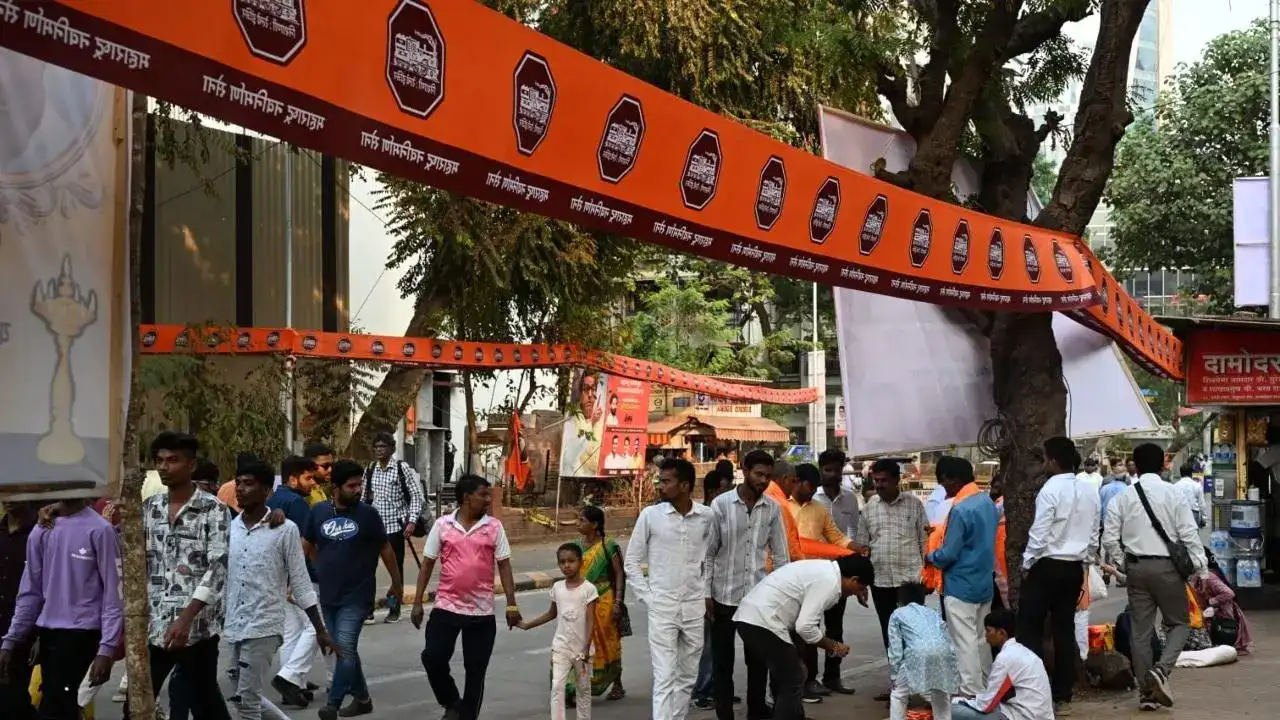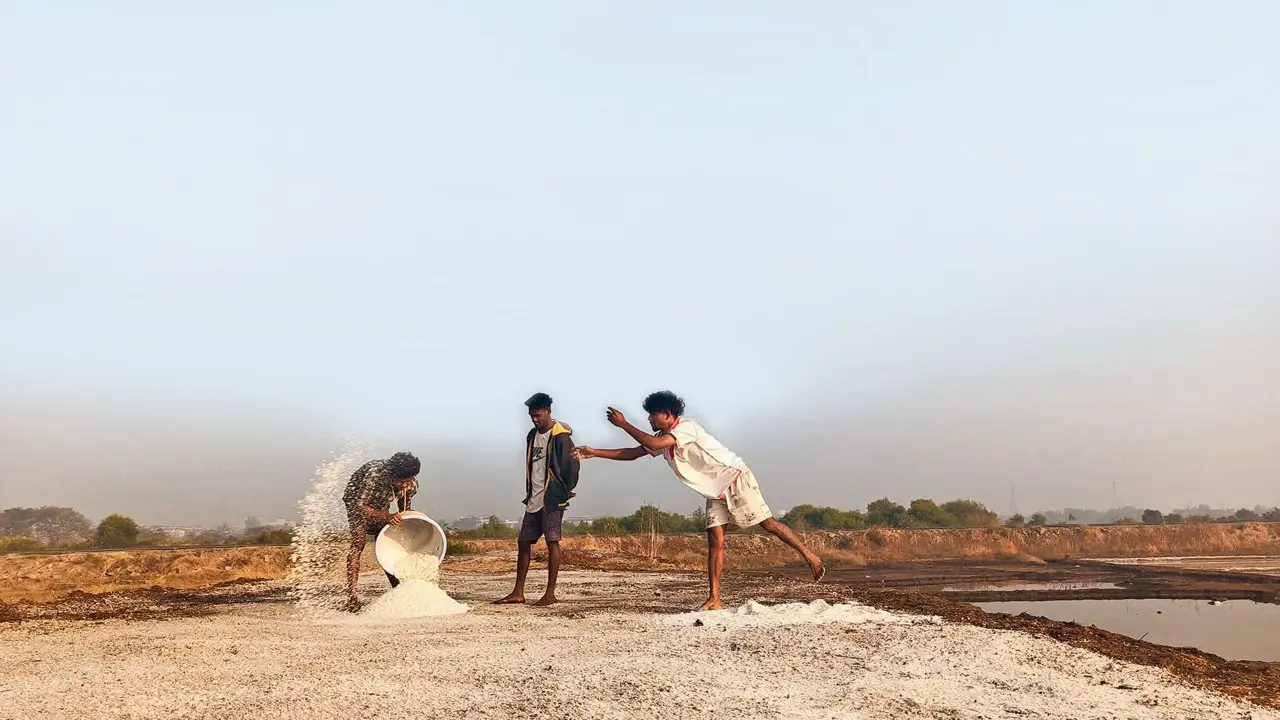
Every winter, it is not only the gulls, plovers, and sandpipers that migrate to Vasai’s wetlands. Tribes from the surrounding areas, including Warlis and Mahadev Kolis of Talasari and Charoti flock to the saltpans to find seasonal employment from November to March. These are the last remaining workers who make salt the traditional way in the coastal town. A walk near the Gokhivare village saltpans will introduce you to them before they return home.
Mahatma Gandhi at Dandi Beach during the Satyagraha.PIC COURTESY/WIKIMEDIA COMMONS
“The five months are a cultural spectacle. Tribes bring colour to the already culturally-rich town,” says Atul Katdare, a Vasai local who will lead the exploration through his group, Bhovara. “Although I am a local, I learnt of the traditions only recently. There couldn’t have been a better time than the Dandi March anniversary to invite people to see how salt is made,” he adds.
Meet the communities
Agris: The original owners of the saltpans, they are one of the oldest inhabitants of Vasai. The walk halts at the age-old Mithagar Chimney (below) that once processed salt by-products. It now lies in ruins.
Warli: With time, the Agris delegated work to the tribals while retaining ownership of the pans. The Warlis bring glimpses of Warli art and typical tribal huts to the saltpans. Expect to see these on your walkthrough.
East Indian Christians: In 1914, the Gokhivare village was struck by cholera. It is believed that the St Roque’s Church was built as a promise made to St Roque (patron saint for cholera) during this period. Stop by to marvel at this historic structure.
Kharvi: Originally from Gujarat, the community migrated to Vasai to learn the ways of making salt. The Kharvis built a temple called dedicated to Mahadeva in the area, where the walk makes a pitstop.
Atul Katdare
Bhandari: Traditionally toddy makers, the community also practises fishing and farming. A local Bhandari family will pour fresh toddy for brunch during the exploration.
Salt talk
Atul Katdare reveals how salt pans once dotted the coastline of Vasai, Naigaon, all the way northward to Virar. Today, most of these saltpans have faded into memory for two reasons.
1 While younger generations of fisherfolk communities embrace the profession, educated children of salt makers don’t wish to carry the legacy ahead
2 Rampant development in the coastal area will erode the quality and efficiency of the saltpans
ON March 22; 7.30 am to 11 am
AT Gokhivare Village, Vasai East. (Exact location shared on registration)
MESSAGE 9819060144
ENTRY Revealed on enquiry