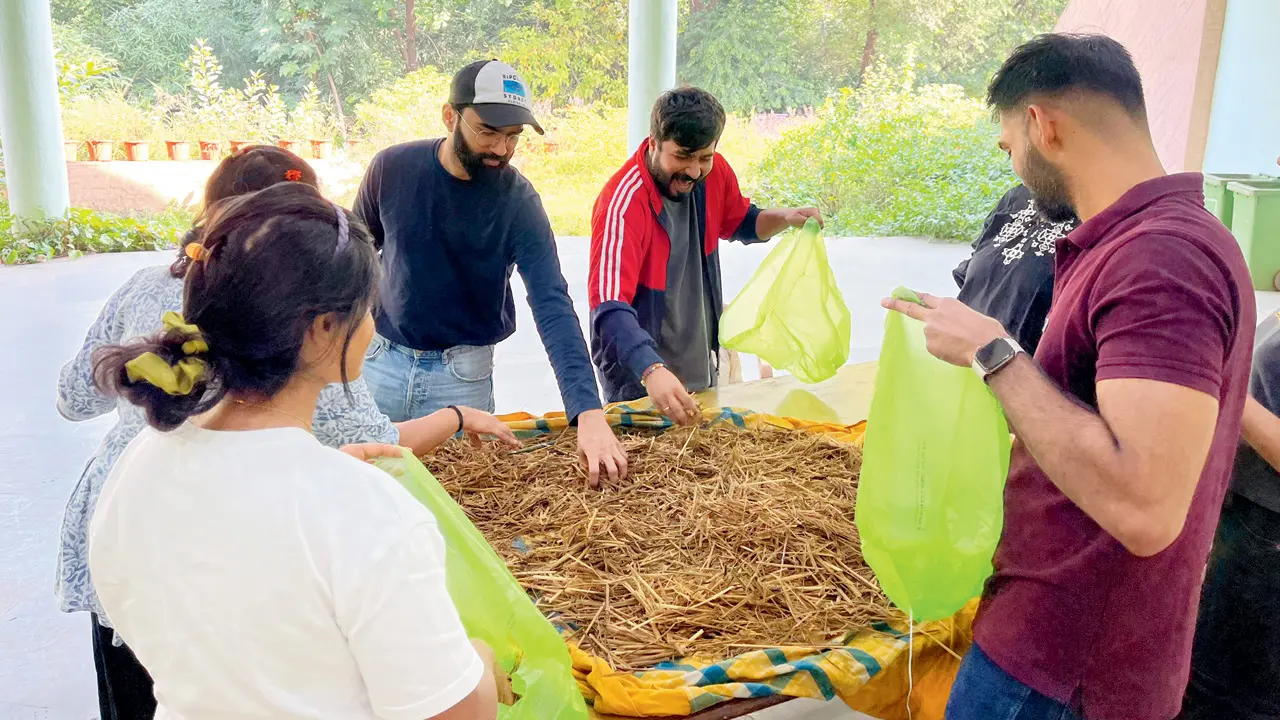
If someone told us we could grow a steady source of protein with just 5 gm carbs, 0.35 gm fat, and 3 gm of protein per cup, in a bag from inside our homes, we’d ask if they were tripping on mushrooms. Turns out, they are; just not the kind you’d imagine.
The Oyster Mushroom is one of the easiest fungi groups to grow on a tight budget, and a tighter schedule. This weekend, a workshop led by Anurag Karekar of the Naturalist Explorers group will arm you with the know-how to grow your own.
ON March 15; 9.30 am
AT Maharashtra Nature Park, opposite Dharavi Bus Depot, Dharavi.
LOG ON TO @naturalistex
ENTRY Rs 1111 (includes materials)
Fun with fungi
How Oyster Mushroom comes to harvest within one month of your first experiment
Day 1: A substrate is prepared by sterilising domestic waste such as hay, saw dust, or bagasse. Mushroom spores are mixed in, and stored indoors in a bag or a cardboard box.
Week 2-3: The mix turns white. Cut slits in the container and move them to a brighter area.
One month: Pin-shaped structures appear. Keep a close eye. Within days, they multiply in size to form the mushroom.
Fact check
Karekar weighs in on common misconceptions around consuming mushrooms
Mushrooms are unhygienic decaying matter
While mushrooms draw nutrition from agricultural waste, they themselves are hygienic and nutritious.
Mushroom farming is an expensive hobby
You can source hay from your local market. A clean cardboard box can act as your container. Fungi require minimal watering (misting).
Mushrooms are poisonous
Oyster Mushrooms are perfectly edible. Keep an eye on your white substrate. Colours can mean unwanted fungi growth.