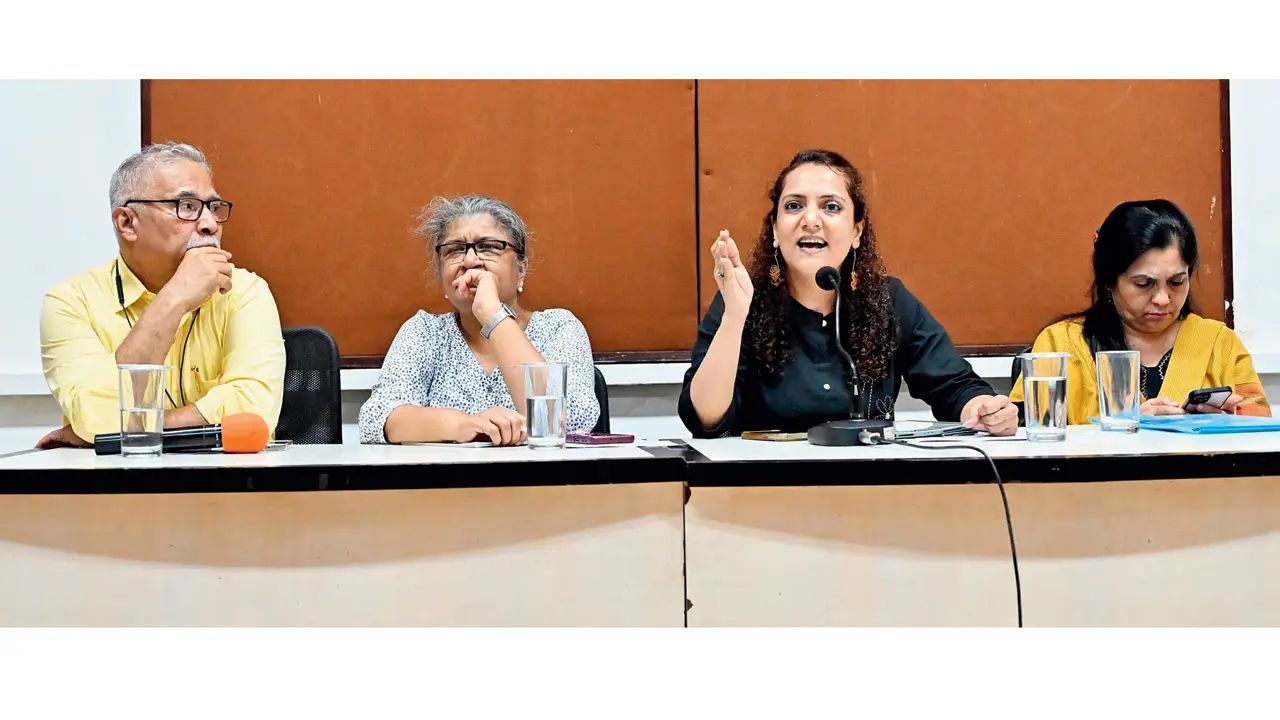
More than 30 rights groups held a joint press conference on Wednesday, March 11, afternoon at the Mumbai Press Club, Azad Maidan in SoBo over the Maharashtra Cabinet’s decision to approve the draft ‘Dharma Swatantrya Adhiniyam, 2026’, an anti-conversion law reportedly designed to regulate religious conversion and interfaith relationships.
First speaker activist Teesta Setalvad spoke about the secrecy and opacity of this proposed law. “The autonomy of women is at stake. Maharashtra will also see an uptick in vigilante activism, which will weaponise this law,” she explained. Chayanika Shah, working in the queer space, made a strong case about this law being used to attack women’s freedom, broadening its ambit to “the law will be devastating for the personal autonomy of young people too.” The Bombay Catholic Sabha’s (BCS) Dolphy D’Souza said that this legislation, including conversion through allurement or inducement, “will lead to criminalising all charity works.”
Dominic Savio Fernandes, Auxiliary Bishop (left), speaks during a press conference
Auxiliary Bishop of Bombay Dominic Savio Fernandes, said, “Laws are meant for people’s welfare and to bring about communal harmony. This impinges on personal freedoms. May God be with us.” Aamir Kazi said, “as youth representatives, we will create awareness. A signature campaign is one such outreach,” while Lara Jesani from the People’s Union of Civil Liberties (PUCL) claimed, “these polarise the State, and give the impression that women do not have a mind of their own.”
Top concerns
>> The draft law text has not yet been made public, raising serious concerns about transparency and the democratic process
>> Legislation with far-reaching implications for religious freedom, privacy, and personal liberty cannot be drafted and introduced without public consultation, scrutiny, and debate
>> Growing pattern of anti-conversion laws framed around ‘love jihad’
The fallout
Stigmatises interfaith relationships, fuels communal suspicion, and undermines the constitutional autonomy of adults to choose partners and their faith
Law would impose a highly intrusive regulatory regime over religious conversion, including:
1. Prior permission from a designated authority before conversion
2. A 60-day advance notice requirement
3. Mandatory post-conversion registration within 25 days
4. Relatives may trigger criminal probes by alleging coercion