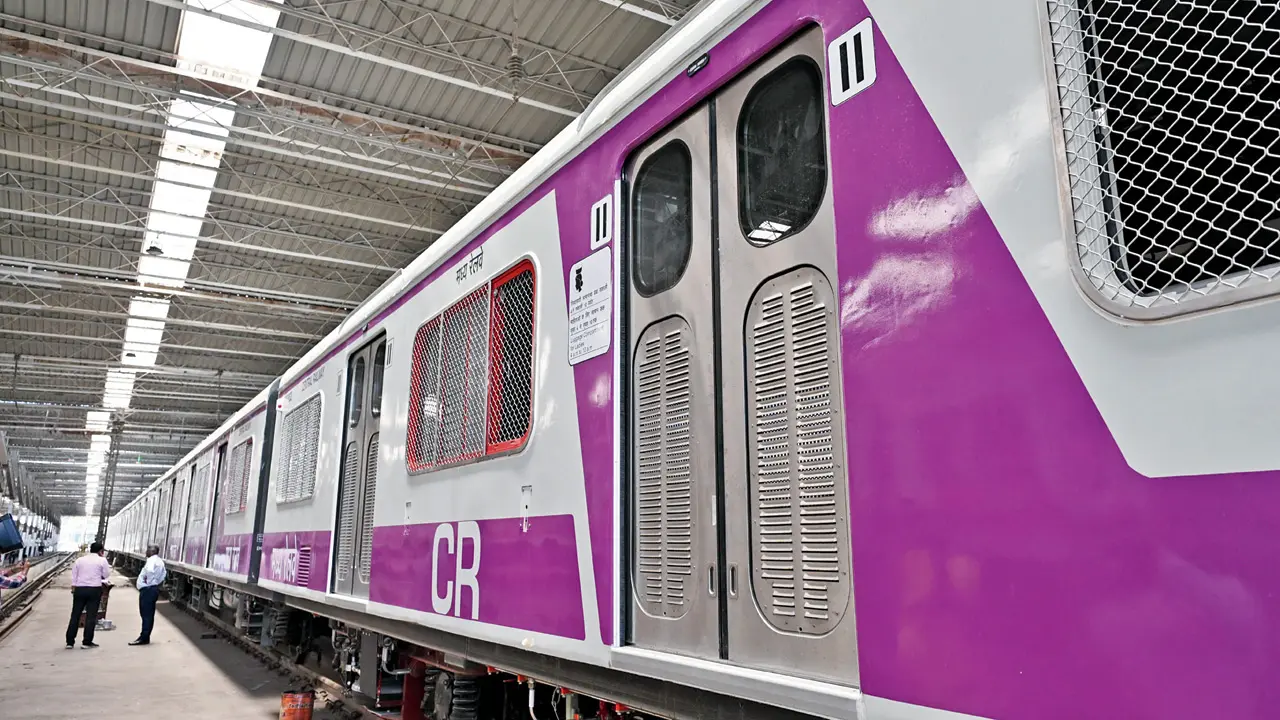
The new non-AC train with automatic closing doors arrived in Mumbai on Monday, introducing several new features that have sparked debate among commuters
and stakeholders. The train has been developed in the aftermath of the June 9, 2025 Mumbra incident, which reignited concerns over open doors in Mumbai’s suburban network.
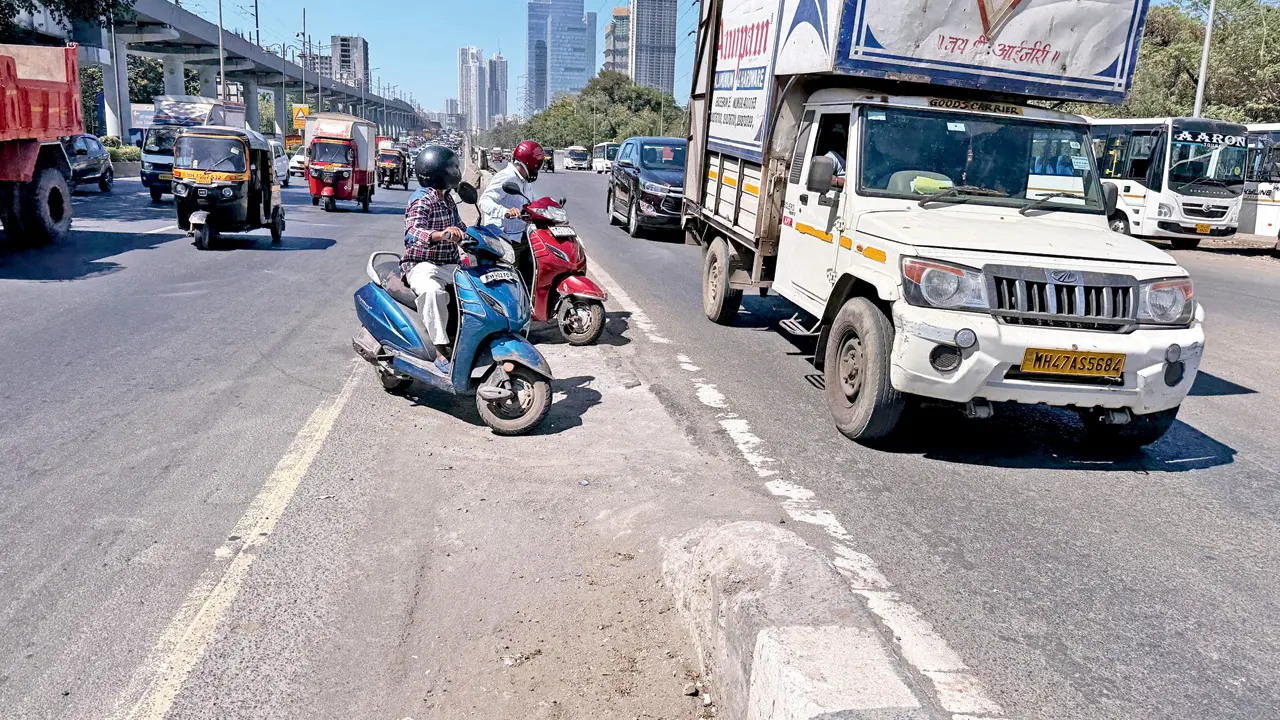
Hanging out of trains continues to pose a major safety risk — in 2025 alone, 525 commuters died after falling from trains, while 1188 were injured due to overcrowding. mid-day conducted a first-hand review of the train upon its arrival and presents a simplified guide to its features and concerns:
What about luggage compartments?
The train includes larger luggage compartments at both ends of the coaches.
>> Wider than existing ones
>> Segregated with doors
>> Includes a time-specific ladies’ luggage compartment
Will overcrowding lead to suffocation?
Railways say the train is built on a platform similar to AC EMUs, which operate with sealed doors.
Additionally:
>> Windows remain open for airflow
>> Doors have louvred sections (two-thirds covered) to allow air movement
Will fares change?
No the fare structure will remain the same as that of existing suburban trains.
What is the non-AC door-closing train? Where will it operate?
The train is a new class of suburban local designed with automatic door closure to improve passenger safety. It has been manufactured at the Integral Coach Factory in Chennai and has arrived at Central Railway’s Kurla carshed. It is expected to operate primarily on the Central Railway main line.
Why not introduce only AC trains instead?
Officials said this is an interim safety measure. A tender for 238 customised AC local trains is already in process to gradually replace the existing fleet. This non-AC version is meant as an immediate solution.
What safety features are included?
>> Sliding doors with tubular partitions
>> Emergency evacuation provisions
>> Talk-back system and alarm mechanism
>> External door-opening option in emergencies
>> CCTV cameras in all coaches
>> Smoke and heat detection systems
>> External reset mechanism for quick restoration
Why introduce closed doors in a non-AC train?
The design follows the Mumbra incident, where multiple commuters fell from a running train. Railways developed this as a practical safety solution after discussions with the Railway Board to reduce accidents linked to open doors.
What is the coach configuration?
The train has a different layout compared to existing locals.
>> Vestibule connectivity (half gangways)
>> Interconnected coaches in a 6+3+3 formation
>> Improved passenger movement and airflow across the rake
Will ventilation be an issue?
Railways say ventilation has been improved through:
>> Roof-mounted ventilation units (RMVU) supplying 10,000 m³/hour of fresh air
>> Two such units per coach
>> Wider windows for better airflow and natural light
What about performance during the monsoon or peak summer?
Officials said the system is more advanced than older trains. The design is based on AC local train shells, which have performed well across seasons. Similar ventilation units will ensure airflow even in crowded conditions.
How will platforms handle different coach positions?
The train is yet to undergo trials. A detailed operational plan will be prepared later, including:
>> Staff deployment
>> Platform management
>> Integration into station announcements and schedules
When will the train enter service?
The train will undergo multiple trials before launch: Confirmatory Oscillograph Car Run (COCR) to assess speed, stability and ride quality
Passenger convenience and safety trials, including:
>> Braking performance
>> Door systems and alarms
>> Passenger comfort
>> Integration with signalling systems
The train will be introduced only after successful completion of trials and necessary corrections.
Will door closure affect peak-hour boarding?
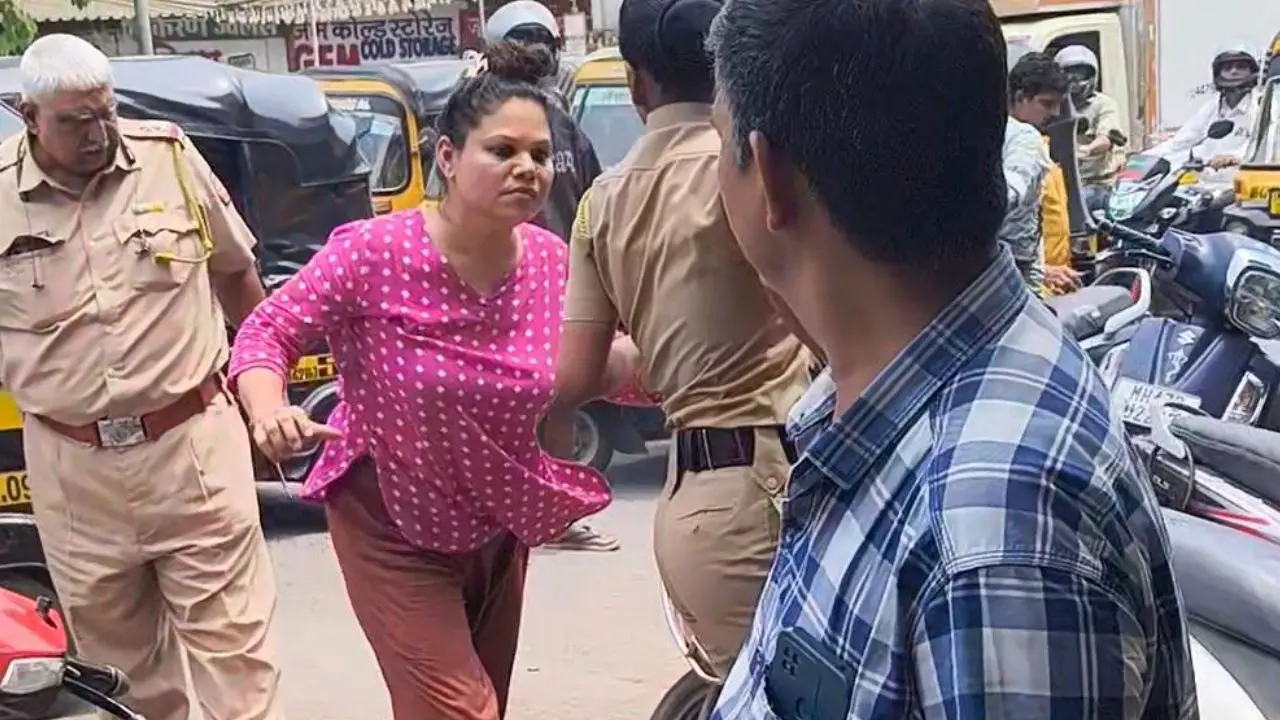
This is expected to be a challenge initially. The train will not move unless all doors are shut. Railway staff may be deployed to manage boarding, similar to AC trains during rush hours.
Are wider windows enough for ventilation?
Yes, according to officials.
>> Window width increased to 1,900 mm (from 900 mm earlier)
>> Sliding glass panels similar to buses
>> Stronger blowers designed for peak-hour load
What if ventilation systems fail?
Railways said maintenance protocols will apply. If blowers fail, the train may be withdrawn from service, similar to AC trains.
Train configuration
8 second-class compartments
4 first-class compartments
2 ladies first-class compartments
5 ladies second-class compartments
2 compartments for divyang passengers
2 luggage compartments (including one time-specific ladies section)