Dil Padosi Hai (1987). It’s difficult to say how many odes to Asha Bhosle will pause to acknowledge this remarkable non-film album, but for me, it remains the work that sealed my conviction of her singularity. By then, of course, I was familiar with the well-circulated highlights of her film career. But Dil Padosi Hai revealed something deeper. Across its 14 tracks, penned by Gulzar and composed by RD Burman, she stretched effortlessly across moods and idioms: from the classically inflected serenity of Bheeni Bheeni Bhor, to the sensuous playfulness of Raat Christmas Ki Thi. It is in albums like this that one encounters Bhosle not just as a voice of songs, but as an artiste of boundless imagination: restless, refined, and entirely inimitable.
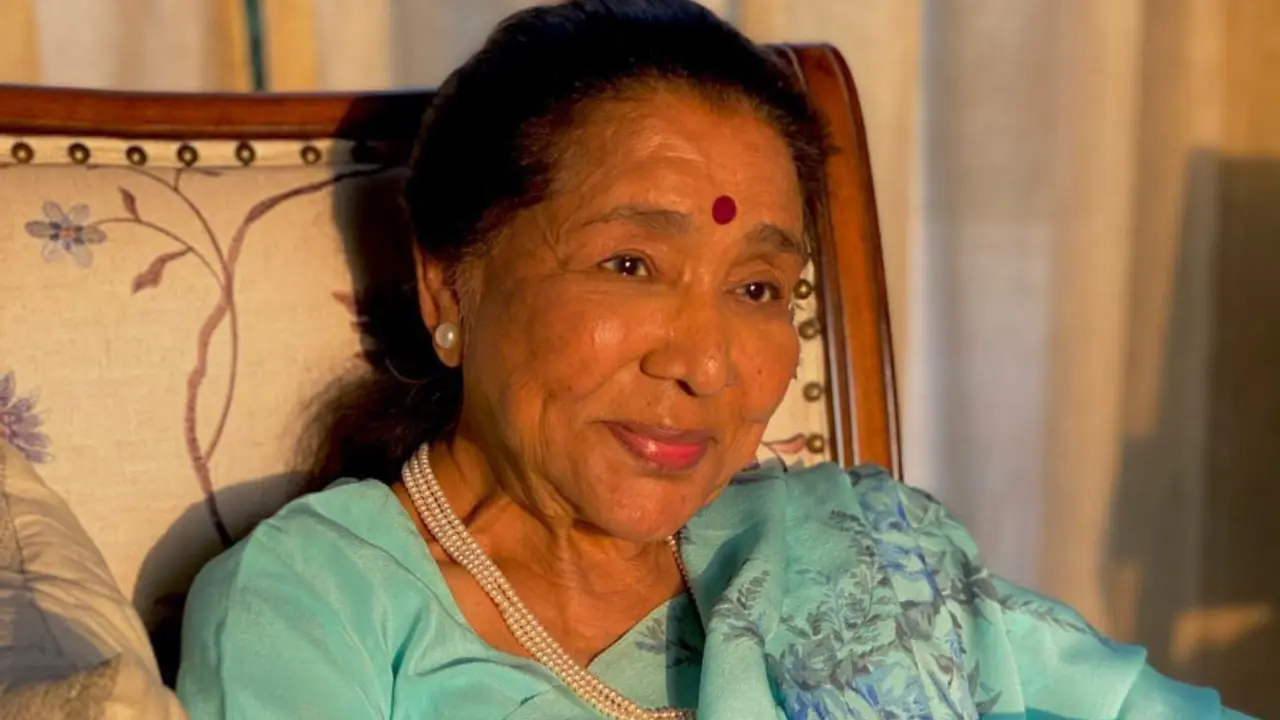
Bhosle leaves behind a musical legacy so vast and varied that it resists easy summation. She was not merely one of the defining voices of Indian cinema; she continuously reshaped what that voice could be.
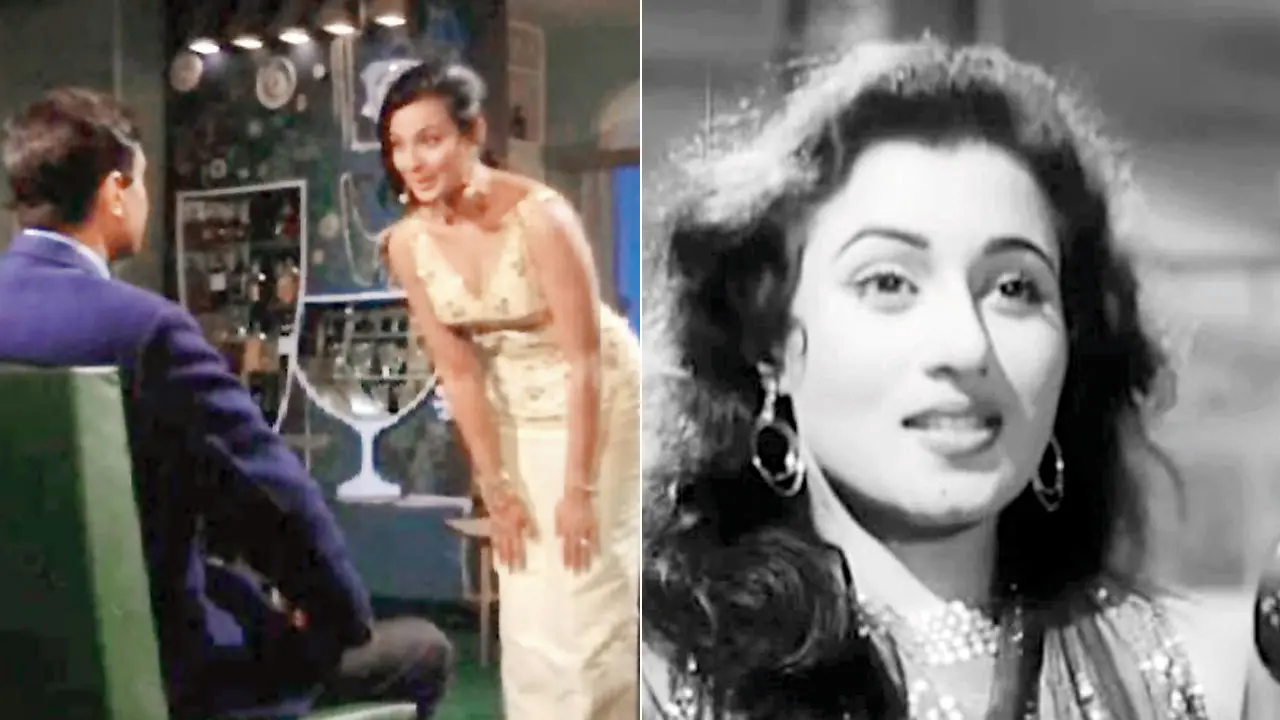
Born in 1933 in Sangli, Maharashtra, into the illustrious Mangeshkar family, she grew up in an environment steeped in music. While her elder sister Lata Mangeshkar quickly rose to become the pre-eminent playback singer of her time, Bhosle carved her own path, often navigating the film industry’s margins before stepping into its centre. In her early years, she was frequently assigned songs that others declined — cabaret numbers, dance tracks, or compositions for secondary characters. But what might have been a limitation became, in time, her greatest strength. Songs like Ab Ke Baras from Bandini (1963) and Raat Akeli Hai from Jewel Thief (1967) offer evidence of the depth, nuance, and vivacity she could bring to a composition even when these were not shot on the ‘heroine’.
(L-R) Anuradha Patel and Naseeruddin Shah in ‘Ijaazat’ Pics/Youtube
Her breakthrough came in the 1950s, particularly through her collaboration with composer OP Nayyar. Songs like Aaiye Meherban (Howrah Bridge, 1950) and Yeh Hai Reshmi Zulfon (Mere Sanam, 1965) carried a modern, rhythmic vitality that set them apart. Bhosle’s voice introduced a new sensibility to Hindi film music, one that allowed for flirtation, mischief, and urban sophistication.
If Nayyar helped establish her identity, it was her partnership with Burman that expanded it exponentially. Their creative synergy produced some of the most memorable songs in Indian cinema. From the infectious energy of Aaja Aaja (Teesri Manzil, 1966) to the haunting introspection of Mera Kuch Saamaan (Ijaazat, 1987), Bhosle demonstrated a remarkable ability to inhabit vastly different emotional landscapes. Her voice could be sensuous, rebellious, tender, or melancholic, often within the span of a single film.
She did not just adapt to genres; she redefined them. She brought a distinctive flair to cabaret songs, lent depth to ghazals, embraced pop and Indipop with equal ease, and even ventured into international collaborations. Her foray beyond film music found a fresh audience in the late 1990s with Jaanam Samjha Karo (1997), a non-film album composed by Leslee Lewis. Its standout track, the lilting Raat Shabnami, became an immediate favourite, connecting her with a younger generation. She continued to explore diverse collaborations, teaming up with Adnan Sami on Kabhi To Nazar Milao, and even Australian cricketer Brett Lee on You’re The One for Me. In 2006, she received her second Grammy nomination for You’ve Stolen My Heart: Songs from RD Burman’s Bollywood, a project recorded with the Kronos Quartet that reinterpreted her late husband’s music for a global audience. And balancing these crowd-pleasers were albums like Legacy, recorded with Ustad Ali Akbar Khan, which fetched her first Grammy nomination in 1997.
With her passing, an era of Indian music draws to a close. She helped shape not just an industry, but the emotional vocabulary of a nation. And yet, her legacy is not confined to nostalgia. It lives on in the countless songs that continue to resonate across time, in the artistes she inspired, and in the very idea of what a playback singer can be.
In the end, Bhosle did more than sing. She transformed music into an expression of life in all its complexity, playful and profound, ephemeral and eternal. With her departure, the silence she leaves behind is immense, but so too is the echo of her voice, which will continue to be heard for generations
to come.
(An editor by profession, Shantanu Ray Chaudhuri has edited The Swinging Seventies: Stars, Style and Substance in Hindi Films, the anthology on ’70s Bollywood)