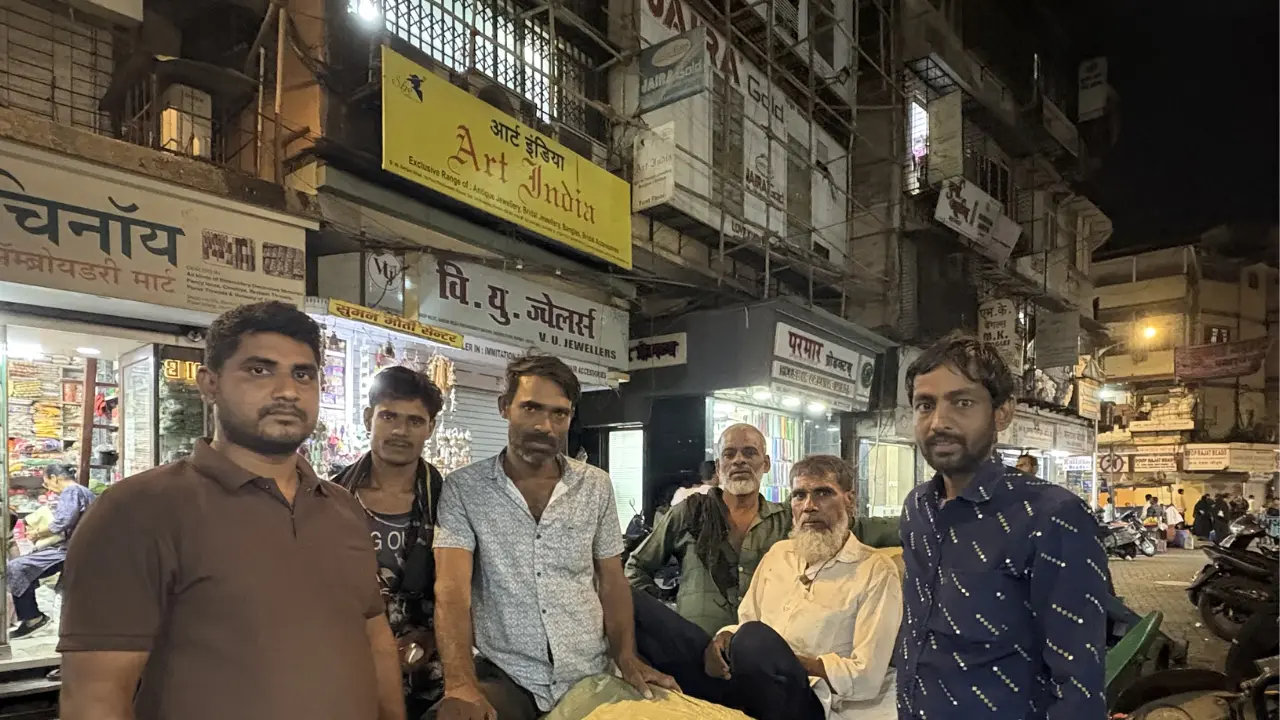
The escalation in West Asia has resulted in a world-wide crisis, and India’s financial hub has also felt the impact of the conflict. Hundreds of labourers employed as loaders in south Mumbai have been witnessing a drop in their workloads. In this test drive, mid-day spoke to multiple stakeholders engaged in the import-export field to understand the impact of the West Asia conflict on the city’s traders.
Industry players say that with the shipping routes hit in the Gulf region, customer demand is declining, thereby impacting the entire inner circle of the business chain.
Freight costs surge, shipments stall
The disruption of key maritime routes, including the Strait of Hormuz, and the partial shutdowns of the Gulf terminals have severely impacted global shipping. Shipments are now being rerouted through longer, multi-leg journeys, significantly increasing both time and cost.
“I shipped goods to Saudi before the war but still had to pay war surcharges. What normally costs USD 800 is now costing nearly USD 5,000,” said Amir, an imitation jewellery exporter.
“At a time of low demand and high risk, sustaining oneself is heroic,” he said.
Air cargo has also taken a hit. Limited airline availability has worsened delays and inflated rates.
“My customer in Dakar has been waiting over 10 days, but the freight is stuck,” another exporter, Surendra said. “Only select airlines like Lufthansa are accepting cargo to East Africa and rates have jumped from Rs 450 per kg to Rs 1,300 with no reliability and frequent cancellations.”
For many, exporting no longer makes financial sense. “Costs are skyrocketing and customers are unwilling to pay more,” said a steel exporter.
Manufacturing takes a hit
The disruption in logistics has directly translated into a breakdown of supply chains. Industries that rely heavily on imports, especially from West Asia are facing acute shortages.
“Earlier, materials came directly from China. Now they arrive through multiple routes with delays,” said Aksh, a steel manufacturer. “War surcharges are added at every stage, so costs keep rising.”
The steel industry is among the worst affected, given its reliance on imports from the Gulf. Around 70–80 per cent of limestone is imported from the UAE and Oman, while nearly 59 per cent of Direct Reduced Iron (DRI) comes from the region. Industrial gases such as LPG, LNG, and propane, critical for welding and molding, are also in short supply. With input constrained, some factories have cut production by as much as 50 percent.
Manufacturers now face a paradox: rising input costs combined with falling export viability are forcing production to halt.
The domino effect: Demand, costs, and cash flow
The crisis is not just about supply, it is equally about demand destruction and financial stress.
Goods worth crores of rupees are stuck in transit, and payment cycles have become uncertain.
Exporters are hesitant to ship due to high costs, buyers resist price hikes, and payments are delayed amid logistical risks. Currency fluctuations, particularly a rising dollar, add further strain.
“We are facing shipping delays, pending payments and a rising dollar,” said Burad, a businessman with over three decades of experience.
Small and medium enterprises (MSMEs) are among the hardest hit, lacking the financial cushion to absorb prolonged disruptions.
A single disrupted shipment can wipe out months of profit. Jewellery exporters report consignments worth lakhs being returned undelivered. “Cargo sent to the UAE was returned to JNPT,” one exporter said.
Insurance has become another bottleneck, with companies increasingly reluctant to cover shipments to high-risk regions.
Ground zero: Labourers face crisis again
While businesses struggle, the most severe impact is felt at the bottom of the economic pyramid. Daily wage labourers who form the backbone of the supply chain are facing a crisis reminiscent of the Covid-19 lockdown.
With factories scaling down and logistics slowing, work opportunities have dwindled sharply. “We used to earn Rs 700– Rs 800 a day, but now it’s barely Rs 100–200,” said Jagdish Kanojia, who leads a group of loaders. “It feels like the Covid period again.”
Fuel shortages coupled with rising prices have worsened living conditions.
“There is no LPG available, it’s being sold in black,” said a factory worker. “Kerosene has gone up from Rs 110 to Rs 150, and even my regular eatery is shut, hence I am returning to my village,” he added.
Like the factory worker quoted above, many others are now returning to their villages as survival in the city is becoming increasingly difficult.
“My roommate left because there is no gas for welding work,” another worker said.
“I have three daughters and I am the only breadwinner,” said Ibrahim, a hawker. “Where should the poor go?”
The ancillary sectors are also under strain. Packaging costs, especially plastics, have surged sharply.“We used to buy plastic at Rs 1,100, now it’s above Rs 2,200,” said Mohammed Ali, who packages cargo for shipments. “Businessmen won’t pay more, but our costs have doubled and workers are leaving.”
Iconic restaurant chains such as Bhagat Tarachand in Kalbadevi, small eateries, and several other establishments in the area are also struggling.
Many have either shut down, shifted to coal and electrical appliances, or reduced operations due to LPG shortages, further impacting workers who depend on them for affordable meals.
Pockets of opportunity amid crisis
Interestingly, not all sectors are losing. Certain industries such as plastics, brass, and select metals may benefit from rising global prices and tightened supply.
A few traders are holding inventory, anticipating better margins. However, most believe the situation depends on how long the conflict lasts.
“A prolonged war could lead to bigger gas disruptions, higher input costs and inflation,” said Burad. “Domestic demand may hold, but exports will lag.”
Still, some remain cautiously optimistic. “This is a short-term disruption, a mid-term opportunity and a long-term test of reliability,” said Pravin Wasan, who runs a shipping company. “Those who manage logistics well will emerge stronger.”
For now, the focus across Mumbai’s trade ecosystem has shifted from growth to survival.
The conflict serves as a stark reminder: in a globalised world, no economy is isolated, and the deepest impacts are often felt by those least equipped to bear them.