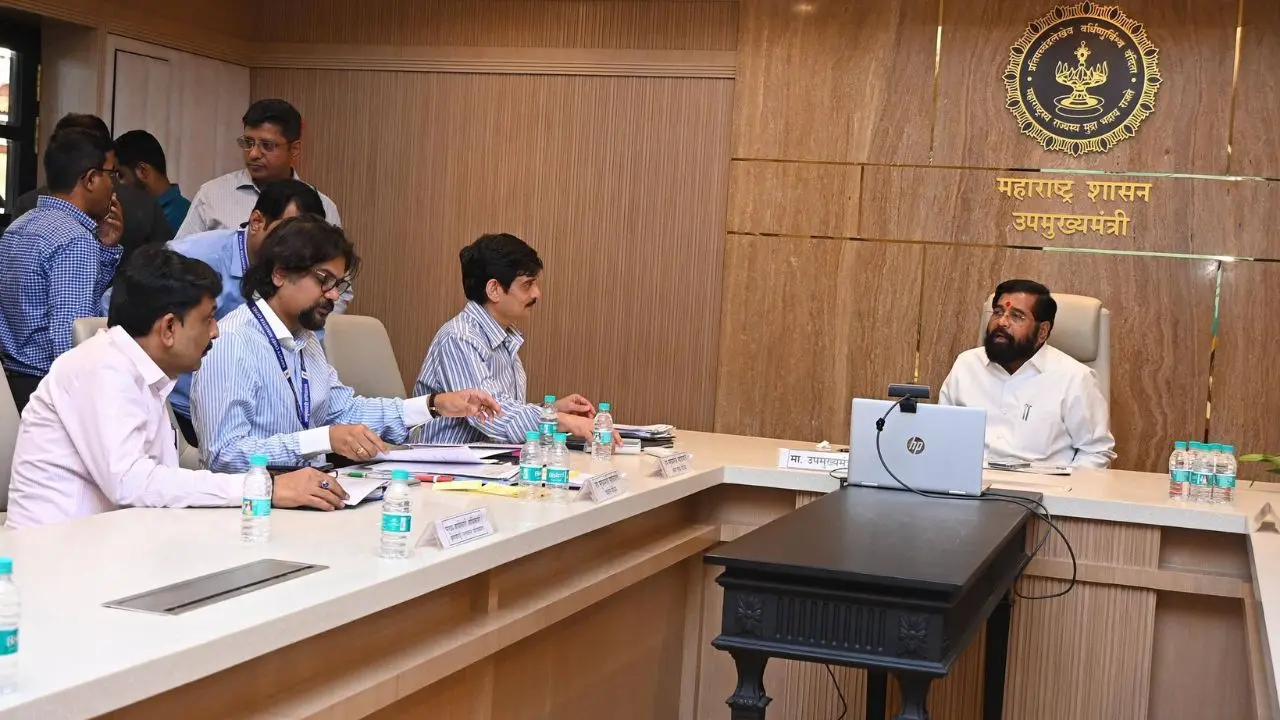
In a bid to transform Mumbai into a slum-free city, Maharashtra Deputy Chief Minister (CM) Eknath Shinde on Monday announced the Hinduhrudaysamrat Balasaheb Thackeray Urban Public Welfare Campaign.
The initiative aims to fast-track slum redevelopment while deploying the advanced NETRAM (Network for Encroachment Tracking and Reporting for Mumbai) system to prevent fresh illegal encroachments, news agency IANS reported.
Shinde said the campaign, launched during the birth centenary year of Balasaheb Thackeray, is a tribute to the late leader’s vision for Mumbai.
The government’s move is expected to give a major push to redevelopment efforts and enable residents to shift to safer, well-equipped housing.
“We are committed to realising Balasaheb Thackeray’s dream of a slum-free Mumbai through this mission,” he said.
The campaign will prioritise slum clusters spread over more than 50 acres where at least 51 per cent of the area is occupied by slums. The Slum Rehabilitation Authority (SRA) will implement cluster redevelopment projects across large parcels of private, government, and semi-government land.
Biometric mapping, 300 sq ft homes, and NETRAM monitoring to drive redevelopment
Authorities will carry out detailed mapping and biometric verification of all slum dwellers. Memorandums of Understanding will be signed with agencies such as the Brihanmumbai Municipal Corporation (BMC), Mumbai Metropolitan Region Development Authority (MMRDA), and MAHAPREIT to streamline execution.
In a significant relief measure, the government has increased the minimum size of rehabilitation homes. All eligible residents will now be entitled to 300 sq ft flats, and older projects will be upgraded to meet the revised standard.
To prevent the emergence of new slums, the government will roll out the NETRAM system. It will use satellite data, GIS mapping, and digital tools to monitor land across the city. High-resolution satellite images will be analysed every four months to detect new structures, and encroachment data will be shared with authorities through the BISAG-N portal for immediate action, including demolition.
The SRA has set up a dedicated implementation cell, while the BMC, Maharashtra Housing and Area Development Authority (MHADA), and district collector offices have been directed to establish similar units.
With redevelopment projects moving towards high-rise buildings, the government has also revised the maintenance deposit framework to ensure long-term sustainability.
(With IANS inputs)