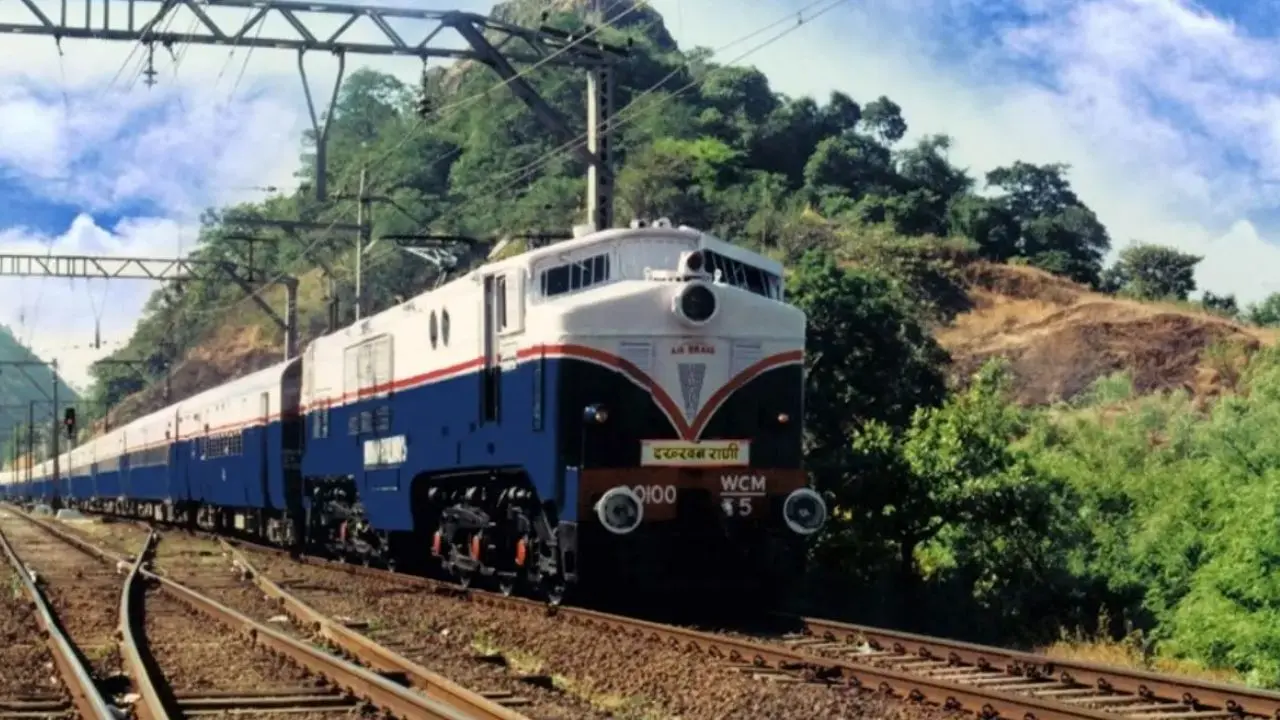
Central Railway’s Mumbai Division on Thursday announced the ‘Train Mahotsav’ celebration of the Deccan Queen Express at Chhatrapati Shivaji Maharaj Terminus (CSMT). As per the official statement from the Central Railway, the celebrations will take place on Friday, March 27.
Event highlights
Festivities will begin one hour before departure at 05:10 pm from CSMT. The train will be adorned with floral decorations, symbolising its grandeur. Furthermore, audio-visual presentations will showcase the rich history of the Deccan Queen, India’s first superfast and electrically hauled train since 1930.
Upgradation works
Central Railway also highlighted that the Deccan Queen has undergone significant refurbishment to enhance passenger comfort and preserve its heritage charm in view of ‘Train Mahotsav’.
They further highlighted a few changes made on the train to facilitate the passengers:
- Dining car refurbished with heritage aesthetics, renovated furniture, a ceiling, and flooring for a premium onboard dining experience.
- Lavatories fitted with vinyl, Duro wipe mats, soap and tissue dispensers for improved hygiene.
- AC coach seats upgraded with seat covers; vinyl provided in doorway areas.
- Roof and panel boards redesigned with vibrant themes.
- Air fragrance dispensers installed.
Deccan Queen
The prestigious Deccan Queen was India’s first deluxe train, introduced on June 1, 1930, and connected Mumbai and Pune. It pioneered several firsts: India’s first superfast train, first long-distance electric-hauled passenger train, and one of the first vestibule trains.
Heritage significance of Deccan Queen
While highlighting the heritage significance of the train, Central Railway also said, “It is a train that has bound generations of loyal passengers. With its vibrant history and continuous modernisation, it remains a symbol of Central Railway’s commitment to blending tradition with innovation.”
Initially, the train was introduced with 2 rakes of 7 coaches each one of which was painted in silver with scarlet mouldings and the other with royal blue with gold lines. The under frames of the coaches of the original rakes were built in England while the coach bodies were built in the Matunga Workshop of the GIP Railway.
The Deccan Queen, initially, had only first class and second-class accommodation. First class was abolished on 1st January 1949 and second class was redesigned as first class, which continued up to June 1955 when third class was introduced on this train for the first time. This was later re-designated as second class from April 1974 onwards. The coaches of the original rakes were replaced in 1966 by anti-telescopic steel bodied integral coaches built by Integral Coach Factory, Perambur.