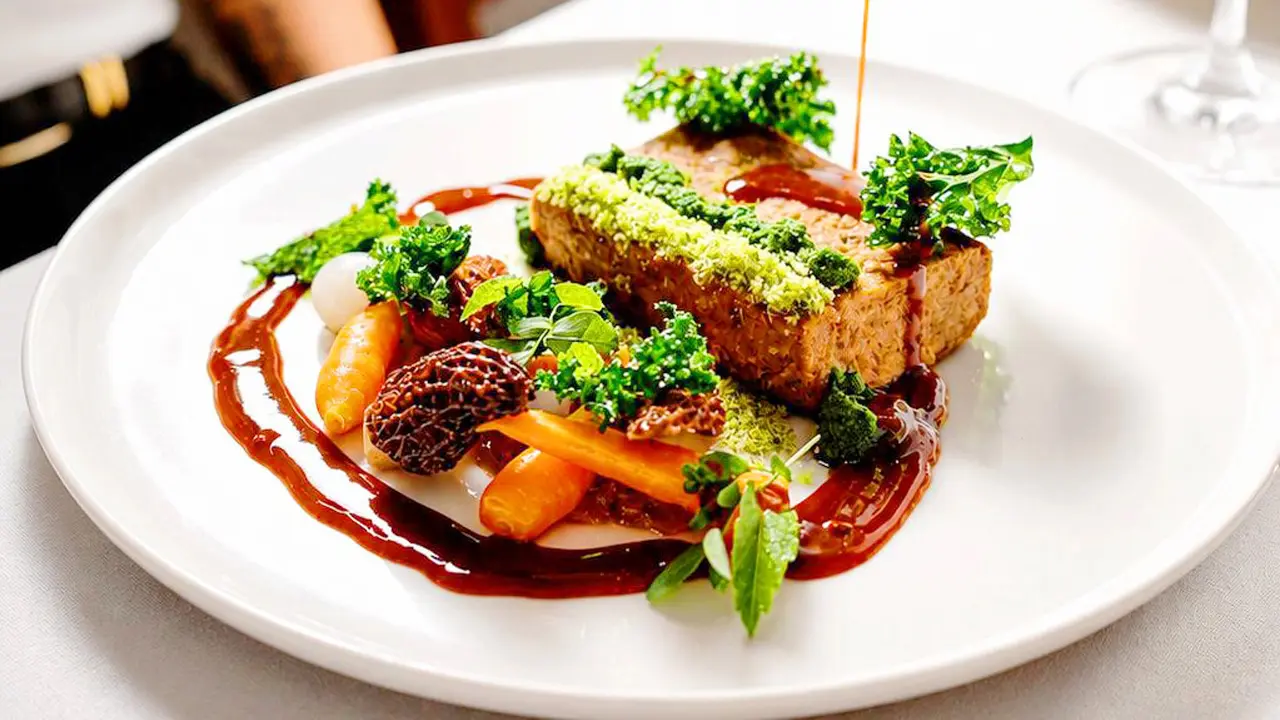
Two days before Sienna Calcutta, the acclaimed family-run restaurant in Kolkata’s Hindustan Park, arrived at MagStreet Kitchen (MSK) in Byculla, the kitchen was already abuzz with preparations. The three-day showcase marked the Mumbai debut of Sienna’s latest concepts, Bar-A-Bari and Rannaghor by Sienna, through a bar takeover at MSK Live, and an intimate 14-course tasting menu at MSK the Counter.
The vegetarian version of Gola Bhaat
Kitchen lab
Rannaghor, which means ‘kitchen’ in Bengali, is an eight-seater chef’s table above Sienna’s dining room. While chef Koyel Roy Nandy keeps them grounded in tradition, chef Avinandan Kundu pushes the boundaries to bring about a balance that defines Sienna. Right now, they are at a stage where they can cook what excites them rather than what people expect. “We’ve served skewers using overlooked cuts like lungs and spleen, not for shock value but to challenge diners. Our guests trust us now, which gives us the freedom to keep pushing boundaries. If you only follow numbers, food becomes predictable,” says Kundu.
Bhaat and Bitters; (right) Kalo jeere Martini
Bazaar bound
A lot of their menu ideas emerge from conversations, travel and trips to local bazaars. A recent trip to Bankura’s villages in West Bengal, changed how they perceived Bengali food. “The cooking relied largely on garlic, onions and chillies, with almost none of the spices people usually associate with the cuisine. Too often, a region’s food story is shaped by its cities. Kolkata isn’t all of Bengal, just as Mumbai isn’t all of Maharashtra. Our job is to keep expanding that narrative,” elaborates Kundu.
(Left and right) The farms where the restaurant grows its own organic produce
Roy Nandy enjoys visiting the neighbourhood markets because it reveals in-season produce. “We’ve grown used to expecting everything year-round, but ingredients like hilsa, mangoes or cauliflower taste their best in their natural cycle. Respecting that rhythm isn’t just better for flavour, it’s better for the ecosystem too. Besides, our markets are also changing, says Kundu, adding, “Five years ago, it was easier to find local leafy greens than imported mushrooms. Even Kolkata, with one of India’s richest fresh markets, is slowly losing ingredients that earlier generations grew up with. My grandfather introduced me to countless local greens that are now becoming harder to source.”
Grow your food
Sienna has begun to grow their produce, preparing their own compost to understand ingredients from the ground up. Alongside that, they work closely with trusted local market vendors. “Those relationships shape what eventually finds its way onto the menu. Colocasia, or kochu, completely changed the way I think about food. Most people know only one variety, but almost every part of the plant is edible. It rarely appears in restaurants because it’s seen as humble or difficult to cook. We’re trying to change that by giving overlooked ingredients the spotlight they deserve,” says Nandy Roy.
In Kolkata, Sienna has been among the first to change the narrative, but the chefs feel one restaurant can’t change a city’s food culture. “It takes many voices pushing together. Thankfully, Kolkata is slowly moving in that direction,” Kundu signs off.
Chicken Gola Bhaat. Pics Courtesy/Sienna
Our menu changes constantly, but Gola Bhaat captures our philosophy best. Inspired by Bengal’s famine years, it shows how simple ingredients could be transformed into something deeply comforting. I’d also recommend our fried rice with fish roe, which celebrates using every part of the fish, and one of our traditional rice sweets, reimagined with a softer texture while preserving its nostalgic coconut and jaggery filling.”
– Koyel Roy Nandy
Raise the bar
Manan Sen
At Bar-A-Bari, a play on bar and bari (home), the focus is on translating Bengal’s forgotten indigenous ingredients into cocktails. Manan Sen, head mixologist and bar manager, shares, “We work with seasonal produce that’s native to our region but often overlooked. For instance, piper chaba (chui jhaal), a long pepper once used in kosha mangsho for its palate-cleansing heat, is now reimagined in cocktails. Seasonality also drives the menu. Think Ice Apple Toddy, with gin, ice apple and palm sugar, inspired by fresh neera, and Bhaat & Bitters, an old-fashioned-style cocktail made with toasted Radhatilak rice-infused rum and mirin, celebrating Bengal’s love for rice. We use lesser-known botanicals such as indigenous basil varieties and kalo jeere (nigella), which appears in a Kalo jeere Martini with tequila, gondhoraj and pickled fig.” He feels the future of Indian cocktails lies in celebrating native botanicals, spices and produce to create a unique identity.