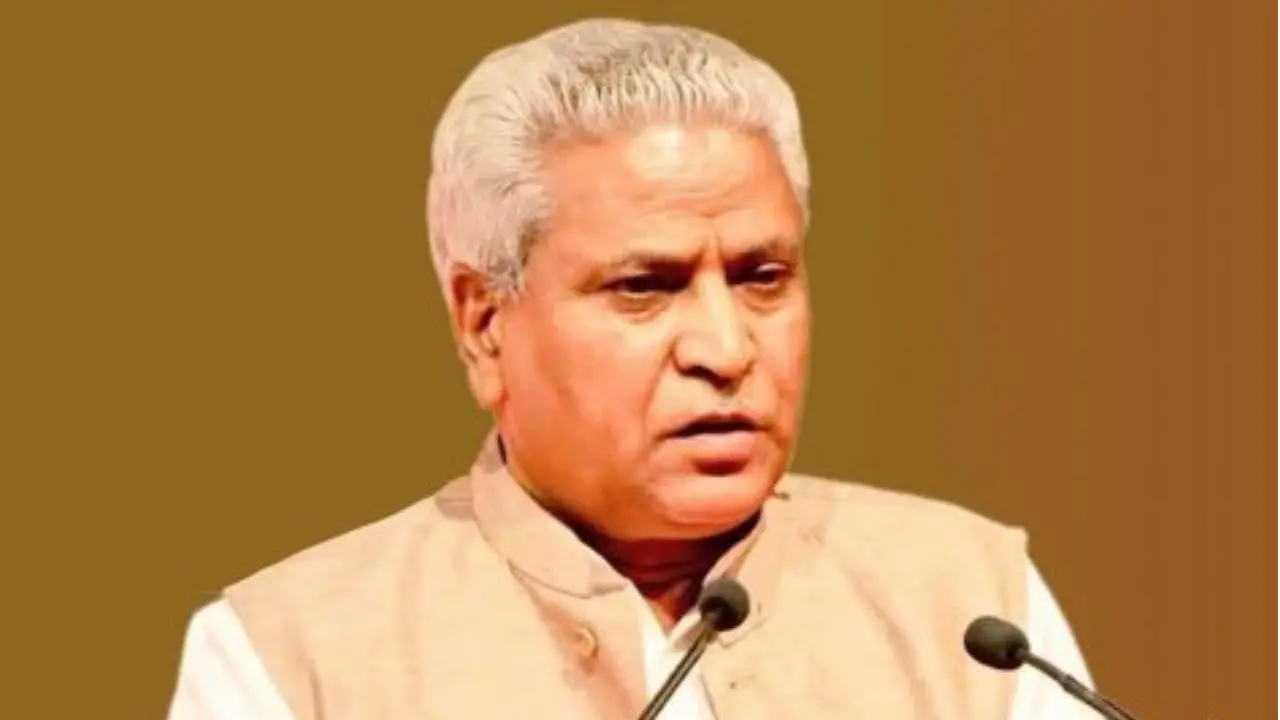
Senior Rashtriya Swayamsevak Sangh (RSS) leader Ramlal on Saturday said that the large-scale participation of RSS workers in protests during the Emergency played a key role in forcing the then Indira Gandhi-led government to hold general elections in 1977, reported PTI.
Speaking at the concluding function of the RSS Konkan division meeting, Ramlal said that if RSS volunteers had not joined the “Satyagraha” movement in large numbers and filled prisons during the Emergency period, India may have continued under an authoritarian regime for a much longer time.
Claims on imprisonment during Emergency
Ramlal, who is the Akhil Bharatiya Sampark Pramukh of the RSS, claimed that nearly 80 per cent of those jailed during the Emergency were RSS workers. He also shared that he himself spent eight months in prison during that period.
The Emergency, imposed by the Congress government between 1975 and 1977, lasted for 21 months. In the elections held after the Emergency ended, the Janata Party came to power, reported the news agency.
RSS support during wars and crisis
Ramlal said RSS volunteers have always stood with the country during times of war and crisis. “You speak to anyone who came from Pakistan or Bangladesh during that period, they will say they are alive only because RSS volunteers helped them,” he said.
Recalling one incident, he claimed that RSS workers risked their lives to recover military supplies that had fallen in a dangerous zone during wartime. According to him, four volunteers died during the operation, though their names were never made public.
He also said RSS workers assisted the civil administration during the 1965 war by managing traffic in Delhi after receiving short-term training. Around 3,000 RSS volunteers also participated in the 1963 Republic Day parade following the 1962 war, he added.
Importance of discipline and unity
Speaking about the organisation’s functioning, Ramlal said the RSS focuses on discipline, coordination and collective work through its daily shakhas. He said the organisation encourages people from different backgrounds to work together and develop a spirit of patriotism. “Working together and mixing with everyone is considered very important in the RSS. It requires coordination of body, mind and intelligence,” reported the news agency.
He also claimed that even people who publicly oppose the RSS privately acknowledge the organisation’s discipline and social work, though some hesitate to say so openly due to political reasons.
Remarks on partition and Hindutva
Ramlal said many people who migrated from Pakistan and Bangladesh during Partition have credited RSS workers for helping them survive. He added that several volunteers made sacrifices, including giving up their lives during that time.
The RSS leader also criticised what he called the growing tendency of society to become self-centred and depend entirely on soldiers for patriotism. According to him, people who follow Hindutva ideology believe in the welfare of all sections of society. “Unfortunately, today whoever is against India is called liberal and progressive, while those who speak about Hindutva are labelled communal or narrow-minded,” reported PTI.
He further commentd on how could Ramayan and Mahabharat be called fictional! “Even if they are considered fiction, they continue to inspire people. How can figures like Ram and Krishna be separated from Indian society? he asked.
Criticism of Western influence
Ramlal criticised what he described as the continued influence of Western ideas in India. He said concepts such as “white supremacy” and Western lifestyles had shaped Indian thinking for years. He also questioned why epics like the Ramayana and Mahabharata are often called fictional despite continuing to inspire millions.
He argued that modernisation should not be confused with Westernisation and warned that blindly adopting Western values could affect India’s social structure and traditions.
India’s future direction
Concluding his speech, Ramlal said the world is increasingly looking towards India for ideas of peace and balance. He added that Indians themselves must decide the future direction of the country.
(With PTI Inputs)